
Transforming your exclusive London garden into a sophisticated retreat starts with the right lighting. Balancing luxury with environmental sensitivity is essential for homeowners who value both style and sustainability in their outdoor living spaces. With custom garden lighting offering tailored designs and eco-friendly technology, you can create a visually stunning ambience that minimises light pollution while enhancing security, comfort, and atmosphere after dark.
Table of Contents
- What Is Custom Garden Lighting?
- Popular Lighting Types And Styles
- Eco-Friendly And Smart Lighting Choices
- Installation, Safety And Legal Requirements
- Costs, Maintenance And Common Pitfalls
Key Takeaways
| Point | Details |
|---|---|
| Custom Garden Lighting | Transforms outdoor spaces by offering tailored illumination that enhances aesthetics and security while creating atmospheric environments. |
| Layered Lighting Approach | Combining ambient, accent, and task lighting is essential for achieving functionality and visual interest. |
| Sustainable Solutions | Utilising eco-friendly technologies like LED and solar-powered fixtures minimises environmental impact while improving efficiency. |
| Professional Installation | Engaging certified electricians ensures compliance with safety standards, protecting both property and user safety. |
What Is Custom Garden Lighting?
Custom garden lighting transforms ordinary outdoor spaces into extraordinary nighttime landscapes by offering meticulously designed illumination tailored specifically to individual gardens. Unlike standard lighting solutions, this approach considers every unique aspect of an outdoor environment, from architectural features to natural landscape contours.
At its core, custom garden lighting involves creating carefully designed external lighting schemes that serve multiple strategic purposes. These purposes typically include:
- Enhancing architectural aesthetics
- Improving nighttime security and visibility
- Creating atmospheric outdoor environments
- Highlighting specific landscape features
- Extending usable living spaces after dark
Professional garden lighting designers take a holistic approach, considering factors such as light intensity, colour temperature, fixture placement, and environmental impact. This means every lighting element is deliberately chosen to complement the garden’s unique characteristics, whether it’s a compact urban terrace or a sprawling suburban landscape.
Key considerations in custom garden lighting design include understanding the specific goals of illumination, selecting appropriate fixture types, and creating balanced lighting layers. These layers typically involve ambient lighting for general illumination, accent lighting to highlight specific features, and task lighting for functional areas like pathways or seating zones.
Pro tip: Consider installing dimmer switches and smart lighting controls to create flexible outdoor environments that can adapt to different moods and occasions.
Popular Lighting Types And Styles
Custom garden lighting encompasses a diverse range of illumination techniques designed to transform outdoor spaces into captivating nighttime environments. Lighting styles range from traditional to contemporary designs, offering homeowners unprecedented flexibility in creating their ideal outdoor atmosphere.
The primary lighting types can be categorised into several key styles:
- Pathway Lighting: Illuminating walkways and garden paths
- Accent Lighting: Highlighting architectural features or landscape elements
- Floodlighting: Providing broad security and general area illumination
- Decorative Fixtures: Adding aesthetic appeal and artistic elements
- Task Lighting: Focusing on specific functional areas like outdoor kitchens or seating zones
Modern garden lighting technologies offer sophisticated options beyond traditional approaches. LED systems, for instance, provide energy-efficient solutions with remarkable colour temperature control and programmable lighting scenes. These advanced systems allow homeowners to create dynamic lighting environments that can be adjusted remotely via smartphone applications.

The selection of lighting styles depends on multiple factors, including garden layout, architectural design, personal aesthetic preferences, and practical illumination requirements. Professional designers typically recommend a layered lighting approach that combines different types to create depth, visual interest, and functional illumination across outdoor spaces.
Here’s a comparison of popular garden lighting types and their best-use scenarios:
| Lighting Type | Ideal Use Case | Visual Impact |
|---|---|---|
| Pathway Lighting | Guiding steps and walkways | Subtle, safe navigation |
| Accent Lighting | Emphasising key garden points | Dramatic focal highlights |
| Floodlighting | Covering large open spaces | Wide, uniform brightness |
| Decorative Fixtures | Creating artistic effects | Visually striking detail |
| Task Lighting | Outdoor dining and seating | Targeted functional light |
Effective garden lighting is about creating atmosphere, not just brightness. The goal is to sculpt light and shadow, transforming your garden into a nocturnal masterpiece.
Pro tip: Experiment with various lighting angles and intensities to discover the most flattering illumination for your specific garden landscape.
Eco-Friendly And Smart Lighting Choices
In the realm of contemporary garden design, sustainable lighting solutions have emerged as a critical consideration for environmentally conscious homeowners. Dark Sky Design Lighting Principles have revolutionised how we approach outdoor illumination, focusing on minimising environmental impact while maximising aesthetic and functional benefits.
Key eco-friendly lighting technologies include:
- LED Systems: Ultra-low energy consumption
- Solar-Powered Fixtures: Zero electrical grid dependency
- Motion Sensor Lights: Intelligent energy management
- Warm-Coloured LED Options: Reduced wildlife disruption
- Programmable Lighting Controls: Precise energy optimisation
Smart lighting technologies have transformed garden illumination beyond traditional approaches. Modern systems integrate sophisticated features like smartphone app controls, adaptive brightness settings, and programmed lighting schedules that can dramatically reduce energy consumption while enhancing outdoor living experiences.
Sustainable garden lighting isn’t just about reducing electricity usage—it’s about creating harmonious interactions between human design and natural ecosystems.
Environmentally conscious lighting design requires careful consideration of wildlife impact. Smart lighting technologies minimise disruption to nocturnal species by using low-intensity, warm-spectrum lights and implementing strategic shielding techniques that prevent unnecessary light pollution.
Below is a summary of eco-friendly and smart lighting features with their benefits:
| Technology | Environmental Benefit | User Convenience Feature |
|---|---|---|
| LED Systems | Lower energy consumption | Extended bulb life |
| Solar-Powered Fixtures | Off-grid operation | Easy installation |
| Motion Sensor Lights | Reduced energy usage | Automatic operation |
| Programmable Controls | Precise energy management | Customisable lighting scenes |
| Warm-Coloured LEDs | Minimise wildlife disruption | Enhances garden ambience |
Pro tip: Invest in multi-functional smart lighting systems that offer energy monitoring, remote control, and automatic scheduling to maximise both ecological sensitivity and convenience.
Installation, Safety And Legal Requirements
Garden lighting installation involves complex considerations that extend far beyond simple aesthetic choices. Compliance with building regulations and planning permissions is crucial for ensuring both legal and safety standards are met in outdoor lighting projects.
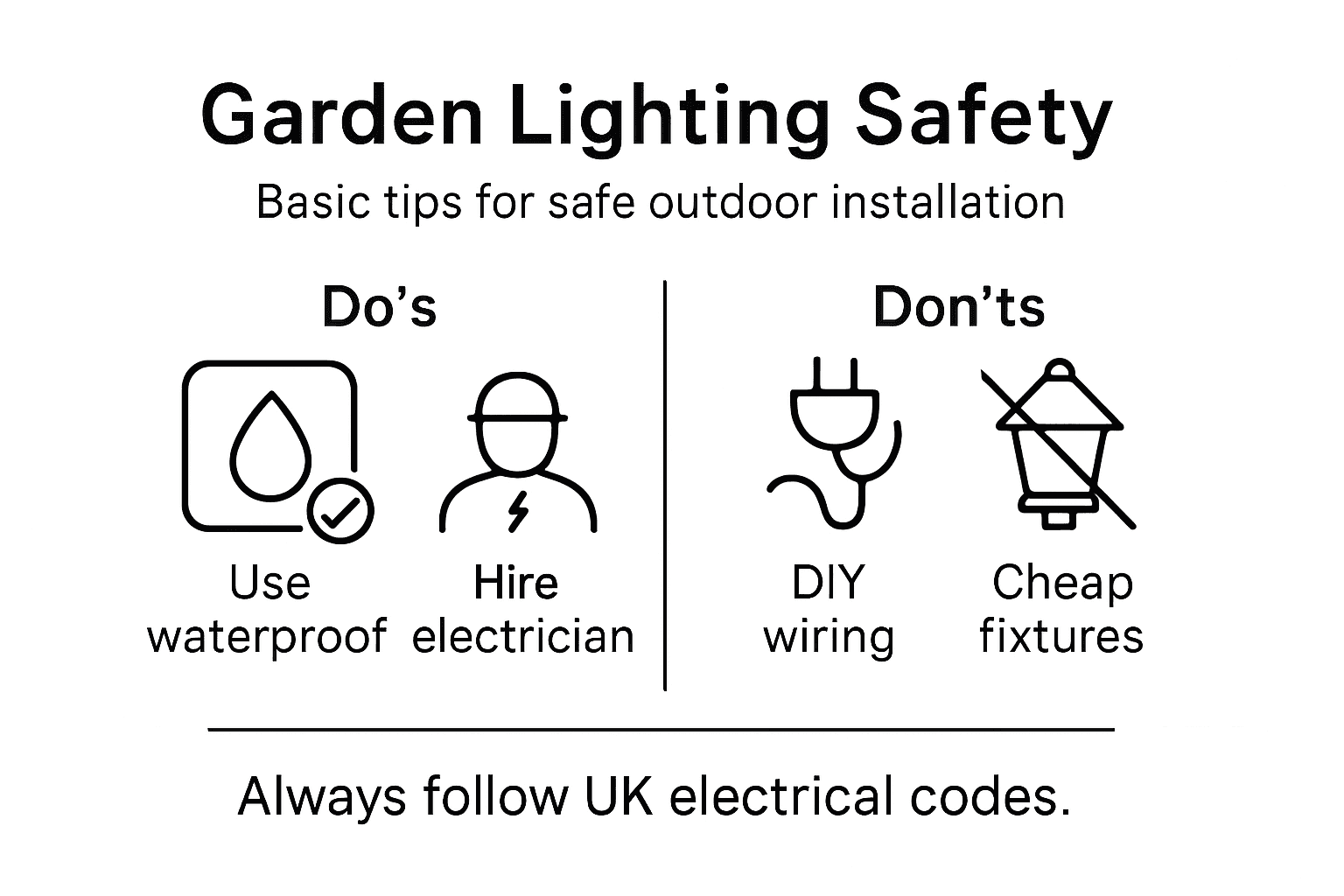
Key legal and safety requirements include:
- Electrical Certification: Mandatory professional installation
- Building Regulation Compliance: Adherence to BS 7671 Wiring Regulations
- Planning Permission: Required for significant lighting modifications
- Fixture Safety Ratings: Ensuring weatherproof and outdoor-grade equipment
- Circuit Protection: Implementing residual current devices (RCDs)
Professional garden lighting installations demand meticulous attention to electrical safety. This involves using appropriately rated exterior-grade cables, ensuring proper earthing, and implementing circuit protection mechanisms that prevent electrical hazards in potentially damp or exposed environments.
Professional installation isn’t an expense—it’s an investment in your property’s safety, functionality, and long-term performance.
UK building regulations provide comprehensive guidance on electrical installation standards, covering everything from cable specifications to protective measures. Homeowners must ensure their garden lighting projects meet these stringent requirements, which are designed to protect both property and personal safety.
Pro tip: Always engage a certified electrician with specific experience in exterior lighting installations to guarantee compliance and safety.
Costs, Maintenance And Common Pitfalls
Custom garden lighting represents a significant investment that requires careful financial planning and long-term strategic thinking. Maintenance considerations extend far beyond initial installation costs, encompassing ongoing energy consumption, replacement parts, and periodic system upgrades.
Typical cost factors and maintenance requirements include:
- Initial Installation: £500-£5,000 depending on complexity
- Annual Energy Costs: LED systems reduce long-term expenses
- Replacement Components: Budget for bulb and fixture renewals
- Professional Inspections: Recommended every 2-3 years
- Control System Updates: Software and technological advances
Common pitfalls in garden lighting can dramatically impact both aesthetic appeal and system functionality. Homeowners frequently encounter challenges such as improper fixture placement, inadequate weatherproofing, and neglecting routine maintenance, which can lead to reduced performance and premature system failure.
Effective garden lighting is an investment in your property—but only if maintained with consistent, strategic care.
Routine maintenance prevents potential environmental and financial waste, ensuring your lighting system remains efficient, visually appealing, and environmentally responsible. Professional periodic inspections can help identify potential issues before they become costly problems.
Pro tip: Create a dedicated maintenance log to track installation dates, replacement schedules, and performance observations for your garden lighting system.
Bring Your London Garden To Life With Expert Custom Lighting
Transforming your outdoor space into a stunning nocturnal retreat requires more than just bright lights. As explored in the article, key challenges include creating balanced lighting layers, selecting eco-friendly fixtures, and ensuring legal compliance—all tailored to your unique garden character. If you want to avoid common pitfalls like improper fixture placement or neglecting maintenance, partnering with an expert who understands these specific needs is essential.
Discover how Wicked Gardens LTD integrates bespoke garden lighting into luxurious, sustainable designs that amplify architectural features and natural beauty. Whether you seek ambient lighting to extend your living space after dark or smart, eco-conscious options that respect wildlife, our team delivers exceptional results for discerning London clients.
Elevate your outdoor living experience now with professional guidance and craftsmanship informed by the latest sustainable practices. Explore our full range of personalised services in Gardening Archives – Wicked Gardens to begin your journey.

Ready to enhance your garden with bespoke lighting that suits your lifestyle and values? Visit Wicked Gardens LTD today to schedule your personalised consultation and create a nightscape that truly reflects your vision.
Frequently Asked Questions
What are the benefits of custom garden lighting?
Custom garden lighting enhances architectural aesthetics, improves nighttime security, creates atmospheric environments, highlights landscape features, and extends usable outdoor spaces after dark.
What types of garden lighting are available?
Common types include pathway lighting for safe navigation, accent lighting for highlighting features, floodlighting for general illumination, decorative fixtures for artistic appeal, and task lighting for functional areas like seating zones.
How can I ensure my garden lighting is eco-friendly?
Consider using LED systems for energy efficiency, solar-powered fixtures for off-grid operation, motion sensor lights for energy management, and warm-coloured LED options to minimise wildlife disruption.
What are the key considerations when installing garden lighting?
Important aspects include obtaining necessary electrical certifications, ensuring compliance with building regulations, securing planning permissions for significant modifications, and using weatherproof fixtures to safeguard against environmental conditions.
Recommended
- Why Garden Lighting Is the Secret Ingredient to a Stunning Outdoor Space – Wicked Gardens
- Garden Lighting Design Lewisham | Illuminate Your Outdoor Space
- Sustainable Garden Design Blackheath | Wicked Gardens
- The Rise of Outdoor Living in London: How to Make the Most of Your Garden All Year Round – Wicked Gardens
- Eco-Friendly Garden Rooms: Sustainable Urban Living