
Smart organisation can make the difference between a garden that feels cluttered and one that delivers effortless relaxation and practical joy. Many South East London homeowners struggle to shape their outdoor spaces into truly liveable retreats, yet often fall prey to persistent zoning myths that limit creativity and function. With an understanding of garden zoning principles, you can reimagine your garden as a set of distinct but harmonious zones suited to both urban life and personal style.
Table of Contents
- Garden Zoning Explained And Common Myths
- Types Of Garden Zones For London Homes
- How Garden Zoning Works In Practice
- Design Strategies For Effective Zoning
- Common Pitfalls And How To Avoid Them
Key Takeaways
| Point | Details |
|---|---|
| Garden zoning enhances functionality | Thoughtfully categorising outdoor spaces creates purposeful areas, making gardens more liveable and aesthetically pleasing. |
| Zoning myths clarified | Garden zoning is beneficial for all property sizes, and clever design can achieve effective results without extensive landscaping. |
| Adaptability is key | Use flexible boundaries and multipurpose furniture to allow for seamless transitions and varied garden functions. |
| Environmental considerations are crucial | Understanding microclimates and natural light patterns is essential for plant health and overall garden success. |
Garden zoning explained and common myths
Garden zoning transforms outdoor spaces from chaotic landscapes into purposeful, harmonious environments. By strategically dividing your garden into functional areas, you create a sophisticated blueprint that maximises every square metre of your property. Understanding garden zoning principles helps homeowners design more intelligent, liveable outdoor spaces.
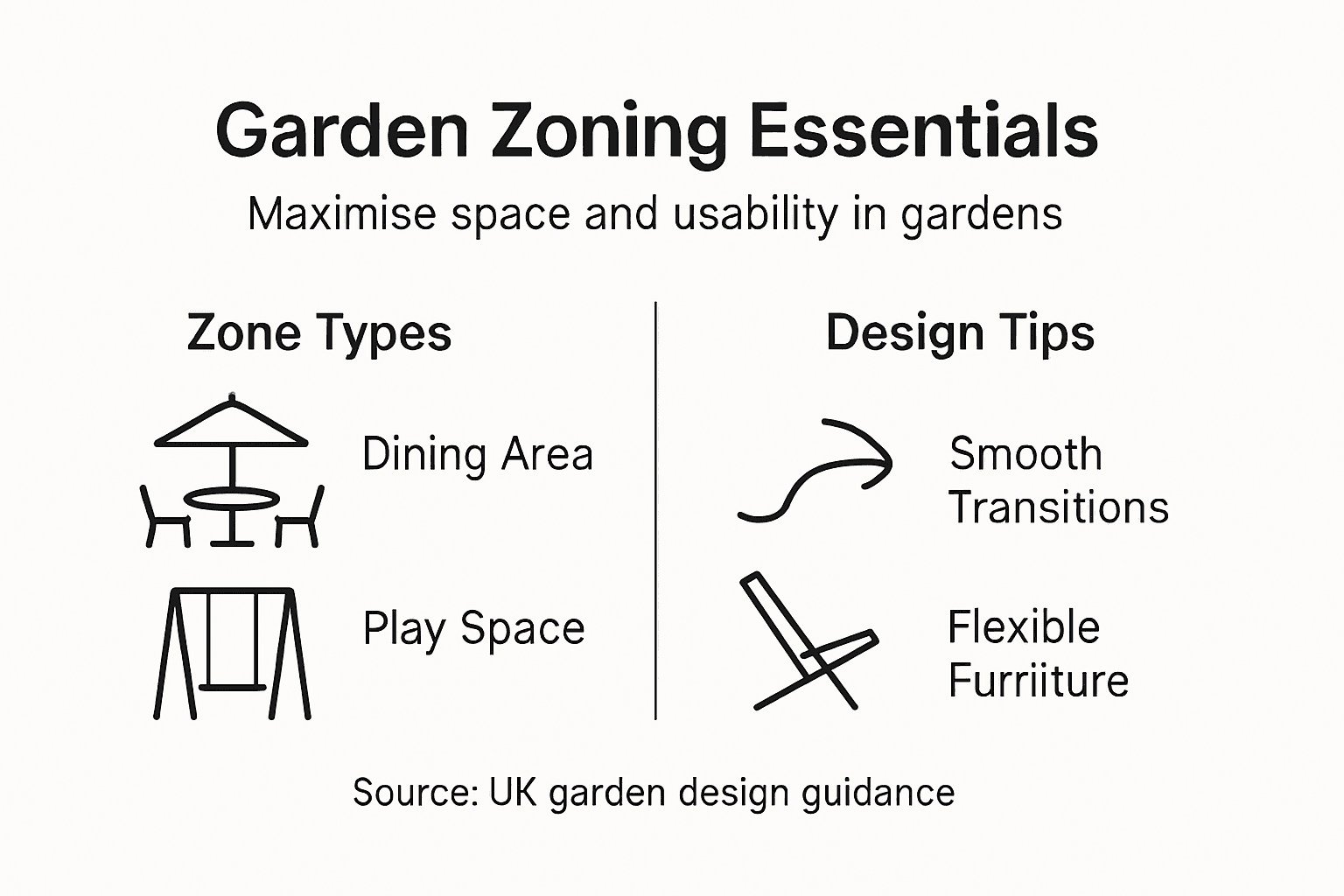
Zoning is not about rigid compartmentalisation, but thoughtful spatial organisation. The key is creating smooth transitions between different garden areas while maintaining distinct purposes. For instance, a garden might include separate zones for:
- Entertaining and dining
- Vegetable and herb cultivation
- Children’s play areas
- Relaxation and meditation spaces
- Sustainable gardening sections
Contrary to popular misconceptions, garden zoning isn’t exclusively for large properties. Even compact gardens can benefit from strategic land use planning, enabling homeowners to create multi-functional outdoor environments.
Some persistent garden zoning myths need debunking. Many people believe zoning requires extensive landscaping or significant investment, but clever design can achieve remarkable results with minimal intervention. Horticultural experts consistently challenge traditional gardening assumptions, emphasising creativity over costly renovations.
Common Garden Zoning Myths:
- Myth: Zoning only works in large gardens
- Myth: Creating zones requires professional landscaping
- Myth: Garden zones must be permanently fixed
- Myth: Zoning makes gardens look too structured
Pro Tip: Consider your garden’s natural flow and existing features when designing zones, using subtle transitions like different ground coverings or strategic plant placements to define spaces without harsh boundaries.
Types of garden zones for London homes
Urban gardens in London require strategic planning to maximise limited outdoor spaces. London housing design standards emphasise creating multifunctional zones that serve diverse residential needs while maintaining aesthetic appeal and practicality.
There are several key garden zone types particularly suited to London homes:
- Entertainment Zone: Dining and social gathering areas
- Green Living Zone: Vegetable gardens and sustainable planting
- Relaxation Zone: Meditation and quiet reflection spaces
- Children’s Play Area: Safe, dedicated spaces for family activities
- Vertical Gardening Zone: Maximising space with wall-mounted planters
Compact urban properties demand intelligent zoning strategies. Urban greenspace data reveals that London homeowners can transform even small gardens into versatile, productive environments by thoughtfully dividing available space.
Each zone should seamlessly integrate with adjacent areas, creating a fluid garden experience. Consider using different ground textures, subtle level changes, or strategic plant placements to define boundaries without constructing physical barriers. This approach ensures your garden feels cohesive yet functionally distinct.
Practical Considerations for London Garden Zoning:
Here is a comparison of garden zone types and their ideal features for London homes:
| Zone Type | Ideal Features | Typical Uses |
|---|---|---|
| Entertainment | Patio, seating, lighting | Outdoor dining, gatherings |
| Green Living | Raised beds, composting area | Vegetable growth, herbs |
| Relaxation | Shade, water feature, benches | Meditation, quiet reading |
| Children’s Play Area | Soft surface, fencing | Safe play, family time |
| Vertical Gardening | Wall planters, trellises | Space maximisation, greens |
- Account for sunlight exposure
- Consider privacy requirements
- Match zones to lifestyle needs
- Incorporate native plant species
- Plan for year-round usability
Pro Tip: Invest in flexible, multipurpose garden furniture that can easily transition between zones, maximising your limited urban outdoor space.
How garden zoning works in practice
Garden zoning transforms outdoor spaces into purposeful environments through strategic spatial planning. Garden design experts recommend starting with a comprehensive assessment of your existing landscape, considering factors like sunlight exposure, soil conditions, and existing architectural features.
The practical implementation of garden zoning involves several critical steps:
- Measure your entire garden space precisely
- Create a detailed sketch or digital layout
- Identify natural microclimates and sun patterns
- Determine primary functional requirements
- Develop flexible boundary solutions
- Consider seasonal usage and adaptability
Successful garden zoning goes beyond mere aesthetic considerations. Biodiversity net gain principles demonstrate how thoughtful zoning can simultaneously serve multiple purposes, integrating environmental conservation with functional design. This approach ensures your garden becomes a dynamic, living ecosystem that adapts to changing needs.

Implementation requires careful consideration of transition spaces between different zones. Subtle design elements like varying ground textures, strategic planting, or level changes can define boundaries without creating harsh physical barriers. The goal is creating a harmonious landscape that feels both structured and naturally fluid.
Key Zoning Implementation Techniques:
- Use portable, multipurpose furniture
- Create visual connections between zones
- Employ vertical gardening techniques
- Integrate sustainable drainage solutions
- Design with future adaptability in mind
Pro Tip: Photograph your garden at different times of day to understand natural light patterns, which will help you strategically position zones for maximum functionality and plant health.
Design strategies for effective zoning
Effective garden zoning requires a holistic approach that balances aesthetic appeal with functional requirements. Garden community design principles emphasise creating spaces that are not just visually pleasing, but genuinely responsive to homeowners’ lifestyle needs and environmental contexts.
Successful zoning strategies incorporate several fundamental design approaches:
- Visual hierarchy and flow between zones
- Consideration of natural light and microclimate
- Flexible boundaries and multipurpose spaces
- Strategic use of vertical and horizontal elements
- Integration of sustainable design principles
- Reflection of personal lifestyle and aesthetic preferences
Design guidance from government frameworks highlights the importance of context-sensitive zoning. This means understanding your specific garden’s unique characteristics – its orientation, existing vegetation, architectural features, and local environmental conditions – before implementing any design strategy.
Transitional elements play a crucial role in effective zoning. By using techniques like graduated ground coverings, strategic planting, subtle level changes, and thoughtful material selections, designers can create seamless connections between different functional areas without introducing harsh physical barriers.
Key Design Considerations:
- Maintain visual coherence across zones
- Use planting to define and soften boundaries
- Incorporate multi-functional furniture
- Design for seasonal adaptability
- Prioritise sustainable material choices
Pro Tip: Create a mood board or digital layout that visualises how different garden zones will interact, helping you anticipate potential design challenges before implementation.
Common pitfalls and how to avoid them
Urban greening research reveals that garden zoning often fails due to overlooked environmental and functional considerations. Homeowners frequently make critical mistakes that compromise their garden’s potential, transforming what could be a vibrant, purposeful space into an ineffective landscape.
The most prevalent garden zoning pitfalls include:
- Neglecting microclimate analysis
- Overcrowding specific zones
- Ignoring natural light patterns
- Poor transition between different areas
- Underestimating maintenance requirements
- Failing to plan for seasonal changes
Design continuity represents a crucial challenge. Planning guidance highlights the importance of creating cohesive spaces that flow seamlessly while maintaining distinct functional identities. Successful garden zoning demands a nuanced understanding of how different areas interact and complement each other.
Most homeowners struggle with maintaining visual and functional harmony across garden zones. Common mistakes include using incompatible materials, creating abrupt transitions, or designing zones that feel disconnected rather than integrated. Strategic planning involves understanding how each area connects, ensuring a sense of unity while preserving individual zone characteristics.
Critical Zoning Mistake Prevention Strategies:
Below is a summary of common garden zoning mistakes and suggested solutions:
| Common Mistake | Consequence | Recommended Solution |
|---|---|---|
| Overcrowded zones | Reduced functionality | Limit elements per zone |
| Ignoring light patterns | Poor plant health | Map sunlight before planting |
| Poor transitions | Disjointed garden flow | Use gradual ground/plant changes |
| Inflexible boundaries | Lack of adaptability | Opt for movable dividers |
| Neglecting maintenance | Overgrown, unusable areas | Choose low-maintenance species |
- Conduct thorough site analysis
- Create comprehensive design sketches
- Use consistent design language
- Implement flexible boundary solutions
- Plan for long-term adaptability
Pro Tip: Photograph your garden throughout different seasons and times of day to understand its natural dynamics before finalising your zoning design.
Transform Your Outdoor Space with Expert Garden Zoning
If you are struggling to maximise your garden’s potential or overwhelmed by how to create distinct, multifunctional zones, you are not alone. This article highlights key challenges such as effective space planning, smooth transitions between areas, and balancing aesthetic with functionality – all vital for turning your garden into a harmonious retreat. Wicked Gardens LTD understands these pain points and offers bespoke solutions tailored to London homes, especially where space is limited but style and sustainability remain paramount.
Discover how our high-end, eco-friendly garden design and landscaping services can help you create seamless zones for relaxation, entertainment, vertical gardening and more. From meticulous planning to expert execution involving natural materials and smart irrigation, Wicked Gardens transforms your outdoor spaces into personalised sanctuaries that reflect your lifestyle. Start your journey today by exploring our extensive Gardening Archives – Wicked Gardens or visit our main site for a unique consultation Wicked Gardens LTD and unlock the full potential of your garden now.
Frequently Asked Questions
What is garden zoning?
Garden zoning is the practice of strategically dividing your outdoor space into distinct areas for specific functions, such as entertaining, gardening, or relaxation, to maximise space and enhance usability.
Can I implement garden zoning in a small garden?
Yes, even compact gardens can benefit from garden zoning. Thoughtful planning and clever design techniques can transform limited outdoor areas into multifunctional spaces without the need for extensive landscaping.
How do I create smooth transitions between different garden zones?
You can create smooth transitions by using varying ground textures, subtle level changes, and strategic plant placements. These elements help define boundaries without harsh physical barriers, maintaining a cohesive look.
What are some common mistakes to avoid when zoning a garden?
Common mistakes include overcrowding zones, neglecting natural light patterns, and poor transition planning between areas. To avoid these, conduct a thorough site analysis and ensure that each zone is well-defined yet harmonious with adjacent spaces.
Recommended
- Small Garden, Big Potential: How to Make the Most of Your Outdoor Space – Wicked Gardens
- Maximising Your Outdoor Space: Garden Design Tips for Every Budget – Wicked Gardens
- Small Garden Design London | Landscaping London
- Small Garden Design Ideas London
- 7 Small Garden Building Solutions for UK Garden Lovers