
Many discerning South East London homeowners crave outdoor spaces that reflect both sophistication and sustainability. With gardens rising beyond mere aesthetics, smart technology is reshaping what is possible for prestigious properties. By blending intelligent automation with traditional horticultural skills, these systems offer a truly bespoke experience and can transform eco-friendly ambitions into reality. Smart garden solutions deliver accessible innovation, all while honouring the timeless joy of gardening and elevating your home’s appeal.
Table of Contents
- Smart Gardens Defined And Common Myths
- Key Technologies Powering Smart Gardens
- Types Of Smart Garden Solutions Available
- Eco-Friendly And Lifestyle Benefits Explained
- Costs, Practicalities, And Common Pitfalls
- Smart Gardens Versus Traditional Gardens
Key Takeaways
| Point | Details |
|---|---|
| Integration of Technology | Smart gardens utilise advanced technology to enhance traditional gardening practices, making them more efficient and sustainable. |
| Democratisation of Gardening | Smart gardens make gardening accessible to all, enabling individuals with limited experience or mobility to engage in horticulture. |
| Environmental Benefits | These systems contribute to eco-friendly practices, such as water conservation and biodiversity enhancement, supporting personal wellness and ecological balance. |
| Strategic Implementation | Gardener success relies on starting with simple, scalable technologies, gradually integrating more sophistication while ensuring financial and technical feasibility. |
Smart Gardens Defined and Common Myths
Smart gardens represent an innovative approach to gardening that integrates advanced technology with traditional horticultural practices. Unlike conventional gardens, these sophisticated systems leverage digital sensors, automated controls, and intelligent monitoring to create more efficient, sustainable gardening environments.
At their core, smart gardens are designed to address several key challenges in modern gardening:
- Precise moisture monitoring
- Automated climate control
- Real-time plant health tracking
- Resource-efficient irrigation
- Remote management capabilities
Many gardeners harbour misconceptions about smart garden technologies. Gardening myths persist that suggest these systems are overly complex or eliminate the human touch from gardening. In reality, smart gardens enhance rather than replace traditional gardening skills.
Particularly compelling is how these technologies can democratise gardening. Sensory garden design principles demonstrate that intelligent systems can make gardening more accessible, helping individuals with limited mobility or horticultural experience create thriving green spaces.
Pro tip: Start your smart garden journey by selecting one technological feature that addresses a specific gardening challenge in your unique environment.
Key Technologies Powering Smart Gardens
Smart garden technologies represent a sophisticated convergence of digital innovation and horticultural expertise, transforming how we approach gardening in the 21st century. Agricultural innovation projects demonstrate the remarkable potential of integrating cutting-edge technologies into garden management.
The core technological components driving smart gardens include:
- Sensor networks for real-time environmental monitoring
- Automated irrigation systems with precision water delivery
- Climate control mechanisms that adjust conditions automatically
- Remote management platforms accessible via smartphone applications
- Machine learning algorithms that predict plant health and care requirements
These technologies work synergistically to create an intelligent gardening ecosystem. Advanced moisture sensors can detect soil hydration levels with remarkable accuracy, triggering automated watering systems that deliver exactly the right amount of water. Temperature and humidity sensors continuously monitor microclimatic conditions, allowing gardeners to maintain optimal growing environments without constant manual intervention.
Moreover, smart garden technologies democratise gardening by making sophisticated plant care accessible to individuals with varying levels of horticultural expertise. Whether you’re a busy professional or a novice gardener, these intelligent systems provide data-driven insights and proactive management strategies that simplify plant care and improve gardening outcomes.

To clarify popular smart garden technologies, see this feature impact table:
| Technology Type | Primary Function | Impact on Garden Management |
|---|---|---|
| Moisture Sensor Networks | Monitor soil conditions | Reduces water waste, prevents overwatering |
| Automated Irrigation | Delivers precise watering | Ensures healthy growth, saves labour |
| Climate Control Systems | Regulate temperature and humidity | Enables year-round plant cultivation |
| Smartphone Integration | Remote monitoring and adjustments | Offers flexible oversight from anywhere |
| AI Diagnostic Tools | Analyse plant health | Speeds up response to issues |
Pro tip: Begin your smart garden journey by selecting one integrated technology that addresses your most significant gardening challenge, allowing you to gradually build a more sophisticated system.
Types of Smart Garden Solutions Available
Smart garden solutions have evolved into a diverse ecosystem of technological innovations designed to transform traditional gardening approaches. Sensory garden designs represent one of the most sophisticated and holistic smart garden implementations, integrating technology with multisensory experiences.
The primary types of smart garden solutions include:
- Modular hydroponic systems for indoor and urban gardening
- Automated irrigation networks with precision water management
- Climate-controlled greenhouse solutions for year-round cultivation
- Smartphone-integrated monitoring platforms
- AI-powered plant health diagnostic tools
- Solar-powered garden management systems
These technological solutions address different gardening challenges by providing targeted, intelligent interventions. Garden community technologies demonstrate how smart solutions can create interconnected green spaces that enhance both individual garden management and broader community engagement.
Intelligent garden solutions are particularly valuable for urban dwellers with limited space or gardening experience. By combining sensors, machine learning algorithms, and user-friendly interfaces, these systems democratise gardening, making sophisticated plant care accessible to everyone from busy professionals to apartment residents.
Pro tip: Start with a single smart garden technology that matches your specific gardening constraints, allowing you to gradually expand your technological garden management capabilities.
Eco-Friendly and Lifestyle Benefits Explained
Smart gardens represent far more than technological innovation; they are a powerful approach to sustainable living and personal wellbeing. Planet-friendly gardening practices demonstrate how technology can actively support ecological conservation and individual environmental responsibility.
The key eco-friendly and lifestyle benefits of smart gardens include:
- Reduced water consumption through precision irrigation
- Carbon sequestration via intelligent planting strategies
- Biodiversity enhancement by creating targeted ecological habitats
- Mental health improvement through garden interaction
- Urban greening for climate resilience
- Resource efficiency minimising waste and environmental impact
Technology transforms gardening from a passive hobby into an active environmental engagement. Gardening’s health benefits extend beyond simple plant cultivation, offering profound psychological and physiological advantages that contribute to holistic personal wellness.
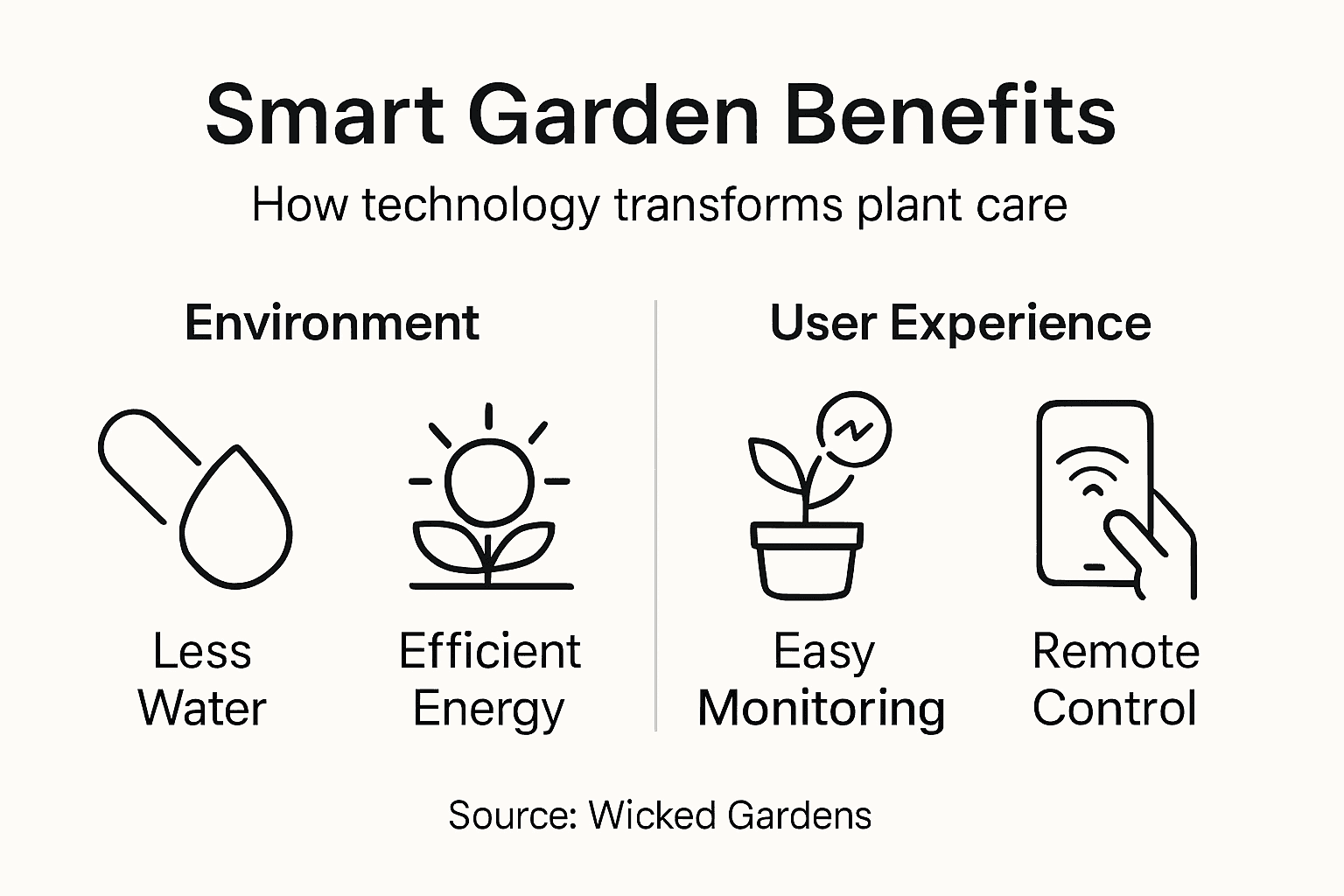
By integrating intelligent technologies, gardeners can create more sustainable, responsive environments that adapt to changing climate conditions while supporting personal health and ecological balance. Smart gardens represent a sophisticated intersection of human creativity, technological innovation, and environmental stewardship.
Pro tip: Select smart garden technologies that align with your specific ecological goals and personal lifestyle requirements, focusing on solutions that provide measurable environmental and personal benefits.
Costs, Practicalities, and Common Pitfalls
Smart garden technologies represent a significant investment that requires careful consideration of both financial and technical factors. Gardening economic landscape reveals the complex challenges gardeners face when adopting new technologies.
The primary cost considerations and practical challenges include:
- Initial technology investment ranging from £200-£2,000
- Technical complexity requiring digital literacy
- Ongoing maintenance expenses
- Integration challenges with existing garden infrastructure
- Learning curve for system management
- Potential technology obsolescence
Common pitfalls emerge when gardeners fail to thoroughly research and plan their smart garden implementations. Community gardening resources underscore the importance of comprehensive planning and understanding potential barriers before technological deployment.
Successful smart garden implementation demands a strategic approach. Gardeners should start with modular, scalable solutions that allow gradual technological integration, minimising financial risk and technical overwhelm. Prioritising compatibility, ease of use, and clear performance metrics will help mitigate potential implementation challenges.
Pro tip: Begin with a single, affordable smart garden component and progressively expand your technological ecosystem as you gain confidence and understand your specific gardening requirements.
Smart Gardens Versus Traditional Gardens
Garden design evolution reveals a profound transformation in how we conceptualise outdoor spaces. Traditional gardens focused primarily on aesthetic beauty, while smart gardens represent a holistic approach integrating technology, sustainability, and functional intelligence.
Key differences between smart and traditional gardens include:
- Data-driven management versus intuitive gardening
- Real-time environmental monitoring
- Automated resource allocation
- Precision plant care
- Adaptive climate response
- Energy and water efficiency
Traditional gardening relies heavily on manual intervention and generational knowledge, whereas smart gardens leverage technological insights. Modern gardening trends demonstrate a significant shift towards more intelligent, responsive garden ecosystems that prioritise environmental sustainability.
Smart gardens transcend ornamental limitations by creating dynamic, interactive environments. They transform gardens from static landscapes into living, breathing systems that respond intelligently to changing conditions, offering unprecedented levels of control and understanding for gardeners.
Here is a comparison of core differences between smart gardens and traditional gardens:
| Aspect | Smart Gardens | Traditional Gardens |
|---|---|---|
| Management Style | Data-driven automation | Manual, experience-based |
| Resource Use | Targeted and efficient | Often indiscriminate |
| Accessibility | Supports varied abilities | Can be physically demanding |
| Adaptability | Responds dynamically to changes | Limited climate flexibility |
| Knowledge Requirement | Technology guides care decisions | Relies on gardener expertise |
Pro tip: Consider your smart garden as an evolving ecosystem rather than a static space, embracing technological adaptations that enhance both aesthetic and functional garden experiences.
Discover How Smart Gardens Can Transform Your Outdoor Space with Wicked Gardens
The article highlights key challenges gardeners face such as precise moisture monitoring, automated irrigation, and eco-friendly sustainability goals through smart garden technologies. If you want to overcome these obstacles while enjoying an elegant, high-end garden tailored to your lifestyle, Wicked Gardens offers bespoke solutions designed to blend technology with luxury. Our expertise in eco-conscious garden design focuses on creating adaptive, efficient spaces that save you time and reduce environmental impact.
Explore our Gardening Archives – Wicked Gardens to learn about smart, sustainable garden ideas and how integrating these innovations elevates your outdoor experience. Ready to bring your smart garden vision to life? Visit Wicked Gardens today and take the first step towards an intelligently designed garden that nurtures both nature and wellbeing.
Frequently Asked Questions
What is a smart garden?
A smart garden is an innovative gardening approach that integrates advanced technology, such as digital sensors and automated controls, to create efficient and sustainable gardening environments.
How do smart gardens improve plant care?
Smart gardens enhance plant care through precise moisture monitoring, automated climate control, and real-time plant health tracking, ensuring optimal conditions for growth without constant manual intervention.
What are the key benefits of using smart garden technologies?
The key benefits include reduced water consumption through precision irrigation, improved plant health, enhanced environmental sustainability, and the accessibility of gardening for individuals with varying levels of horticultural experience.
How does a smart garden differ from a traditional garden?
Smart gardens rely on data-driven, automated management systems, while traditional gardens typically depend on manual intervention and generational knowledge. This allows smart gardens to respond dynamically to environmental changes and provide targeted plant care.
Recommended
- How Sustainable Landscaping Can Transform Your Garden (and Help the Planet) – Wicked Gardens
- The Benefits of Hiring a Professional Landscaping Service – Wicked Gardens
- The Best Plants for a Stunning Year-Round Garden in the UK – Wicked Gardens
- Small Garden, Big Potential: How to Make the Most of Your Outdoor Space – Wicked Gardens
- Things you Need to Know About Garden Drains in 2024
- The Worth of Planting Trees: A Deep Dive
- 7 Essential Tips for Gardening in Yarra Valley – Yarra Valley Carpet Cleaning