
Transforming an outdoor space in South East London is about more than choosing beautiful plants. The challenge lies in crafting a garden that is both visually stunning and truly resilient to the demands of urban life. A bespoke, professional planting plan brings together intelligent plant selection, careful site analysis, and sustainable design principles to create luxury environments that thrive year-round. This article explores how advanced planting strategies deliver sustainable elegance and enrich your property’s value and ecological impact.
Table of Contents
- Defining Professional Planting Plans In London
- Tailoring Planting Schemes To Site Conditions
- Enhancing Seasonal Interest And Year-Round Appeal
- Eco-Friendly And Sustainable Plant Choices
- Reducing Maintenance And Maximising Longevity
- Financial Value And Risk Reduction For Homeowners
Key Takeaways
| Point | Details |
|---|---|
| Professional Planting Plans Enhance Urban Resilience | These plans provide ecological benefits by selecting appropriate plants for local microclimates and urban conditions. |
| Sustainable Practices Are Essential | Choosing native and pollinator-friendly species fosters biodiversity and supports ecological health. |
| Strategic Design Minimises Maintenance Needs | Implementing low-maintenance plants and efficient irrigation systems helps reduce long-term care costs. |
| Landscaping Is a Financial Investment | Properly designed landscapes can increase property value and mitigate environmental risks, offering substantial financial returns. |
Defining Professional Planting Plans in London
Professional planting plans represent sophisticated landscaping strategies that transform outdoor spaces into meticulously designed sustainable environments. In the context of London, these plans go far beyond simple gardening, emerging as intricate blueprints that balance aesthetic appeal with environmental resilience.
A professional planting plan encompasses several critical design elements:
- Strategic plant selection based on local microclimate conditions
- Understanding of soil composition and urban landscape challenges
- Aesthetic considerations including colour theory, texture, and spatial arrangement
- Sustainable horticultural practices tailored to London’s unique urban ecosystem
London’s professional landscaping industry has developed advanced planting design techniques that consider not just visual beauty, but ecological functionality. These plans carefully analyse site-specific conditions, ensuring plants are not merely decorative but contribute to broader environmental goals.
Professional planting schemes typically involve comprehensive site surveys, detailed plant selection processes, and precise implementation strategies. Landscape designers must consider factors like sun exposure, moisture levels, soil pH, and potential urban pollution impacts when crafting these sophisticated plans.
Key Components of Professional Planting Design:
- Seasonal plant performance assessment
- Biodiversity enhancement strategies
- Water management and irrigation planning
- Long-term maintenance considerations
Pro tip: Always consult a professional landscape designer who understands London’s unique urban gardening challenges to create a truly sustainable and beautiful outdoor space.
Here’s a summary comparing core benefits of professional planting plans for London gardens:
| Benefit Type | Description | Example Impact |
|---|---|---|
| Environmental Resilience | Enhances adaptation to urban microclimates | Greater plant survival rates |
| Visual Cohesion | Provides year-round structure and interest | Continuous kerb appeal |
| Financial Value | Increases property worth and reduces risk | Up to 15% greater home value |
| Biodiversity Support | Fosters native species and pollinators | Flourishing urban wildlife |
Tailoring Planting Schemes to Site Conditions
Tailoring planting schemes requires a nuanced understanding of London’s diverse urban landscapes. Each garden presents a unique ecosystem with specific environmental parameters that demand careful consideration and expert analysis. Successful landscape design hinges on comprehensively understanding these intricate site-specific conditions.
Site Condition Assessment involves examining several critical factors:
- Precise soil composition analysis
- Microclimate temperature variations
- Sunlight exposure patterns
- Drainage characteristics
- Urban pollution levels
- Existing vegetation interactions
Urban tree planting strategies demonstrate that matching plant species to specific site conditions dramatically increases survival rates and long-term ecological performance. Professional landscapers must conduct thorough site surveys to understand the intricate environmental dynamics of each unique space.
London’s varied urban environments present complex challenges for plant selection. Factors like building shadows, wind tunnels created by architectural structures, and localised heat island effects can significantly impact plant health. Sophisticated planting schemes must account for these subtle environmental nuances to ensure robust, sustainable landscape design.
Key Considerations for Site-Specific Planting:
- Detailed soil pH testing
- Comprehensive light exposure mapping
- Moisture retention analysis
- Potential urban stress factor evaluation
Professional planting schemes transform urban spaces by creating resilient, adaptive green environments that thrive within their specific ecological context.
Pro tip: Invest in a professional soil analysis to understand the precise environmental conditions of your garden before selecting plant species.
The table below outlines how professional planting approaches address London-specific urban site challenges:
| Urban Challenge | Professional Response | Benefit Achieved |
|---|---|---|
| Limited sunlight | Site-specific plant selection | Healthy growth in shaded areas |
| Urban pollution | Resilient, pollution-tolerant flora | Improved air and soil quality |
| Drainage issues | Tailored water management design | Reduced risk of flooding |
| Heat island effect | Inclusion of cooling vegetation | Lower surrounding temperatures |
Enhancing Seasonal Interest and Year-Round Appeal
Creating a garden with continuous visual interest requires strategic plant selection and sophisticated design principles. Professional landscaping goes beyond mere aesthetic arrangements, transforming outdoor spaces into dynamic, evolving ecosystems that captivate throughout the changing seasons.
Seasonal Layering Strategies include incorporating:
- Spring-flowering bulbs like daffodils and tulips
- Summer perennials with vibrant colour palettes
- Architectural grasses for autumn texture
- Evergreen structures for winter framework
- Plants with interesting bark and berry production
- Strategically placed structural elements
Seasonal planting techniques demonstrate how carefully curated plant selections can create gardens that remain visually compelling throughout the year. By understanding each plant’s unique characteristics and seasonal performance, landscapers can design spaces that offer continuous visual and ecological interest.
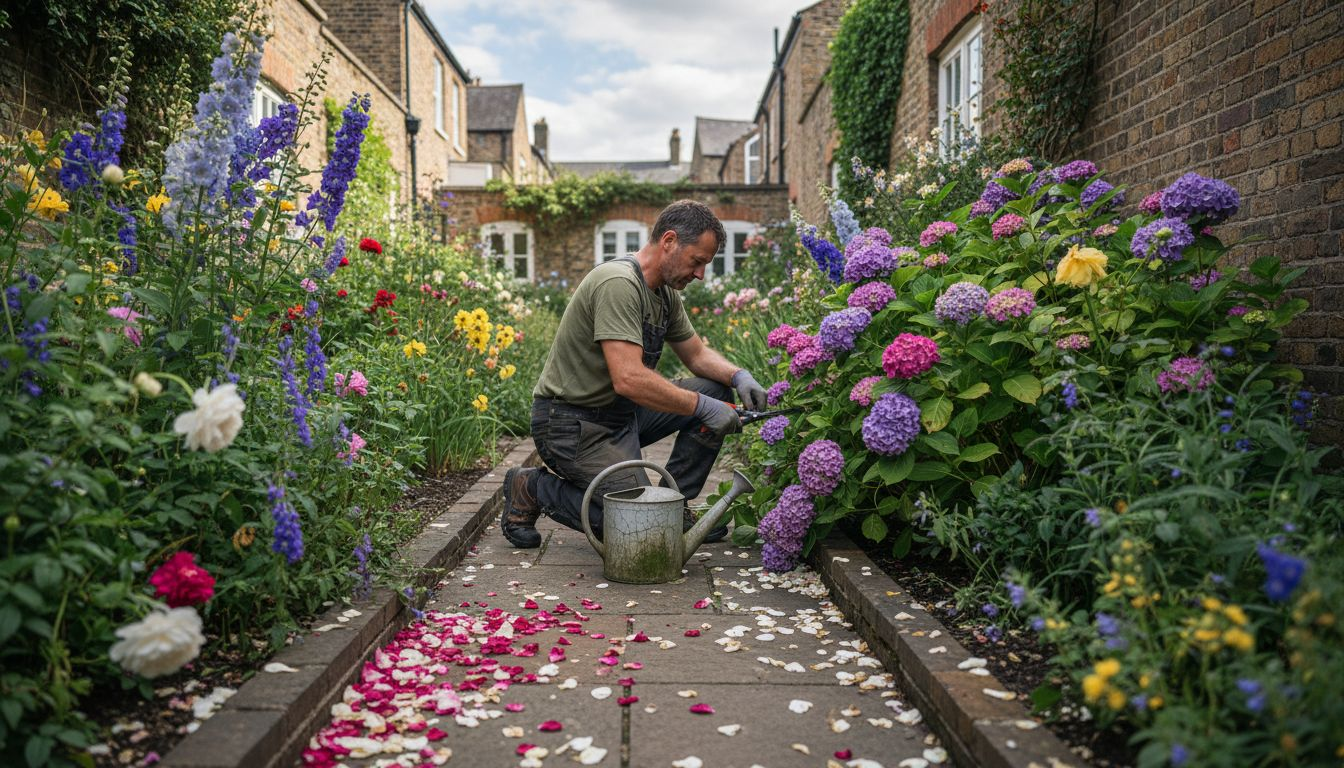
London’s unique urban environment presents distinctive challenges for maintaining year-round garden appeal. Microclimates created by architectural structures, limited sunlight in dense urban areas, and potential pollution impacts require sophisticated plant selection strategies that prioritise resilience and adaptability.
Key Elements for Continuous Garden Interest:
- Diverse plant height and structure
- Complementary colour combinations
- Varied textures and leaf shapes
- Strategic placement for maximum visual impact
A well-designed garden tells a story through its seasonal transformations, revealing nature’s dynamic beauty throughout the year.
Pro tip: Select plants with multiple seasonal attributes, such as spring blossoms, summer foliage, and autumn colour, to maximise your garden’s year-round visual appeal.
Eco-Friendly and Sustainable Plant Choices
Sustainable gardening represents a sophisticated approach to landscape design that prioritises ecological harmony and environmental responsibility. In London’s complex urban ecosystem, selecting plants becomes a strategic decision that extends far beyond aesthetic considerations, focusing on creating resilient, supportive green spaces that contribute positively to local biodiversity.
Sustainable Plant Selection Criteria include:
- Native species indigenous to British landscapes
- Plants supporting local pollinator populations
- Low-maintenance vegetation requiring minimal interventions
- Drought-resistant and climate-adaptive species
- Plants promoting soil health and ecosystem regeneration
- Species with multiple ecological benefits
Sustainable planting strategies demonstrate how carefully curated plant selections can transform urban gardens into powerful ecological networks. By prioritising native and pollinator-friendly species, landscapers can create gardens that not only look beautiful but actively support environmental resilience.
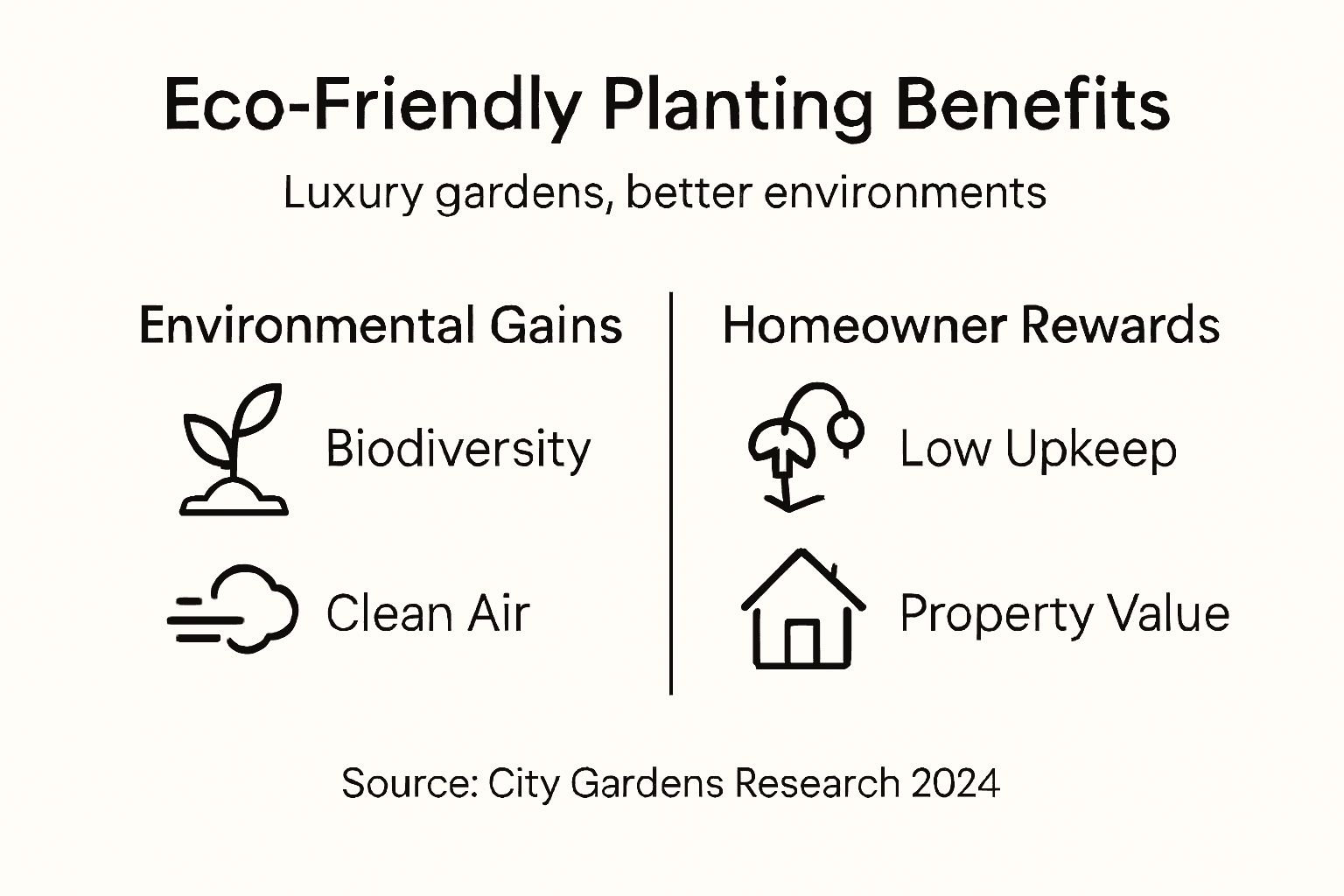
London’s unique urban environment demands nuanced plant selection strategies that consider microclimatic variations, limited growing spaces, and potential environmental stressors. Professional landscapers must balance aesthetic preferences with ecological functionality, selecting plants that can thrive in challenging metropolitan conditions.
Ecological Benefits of Strategic Plant Choices:
- Enhanced urban biodiversity
- Reduced carbon footprint
- Improved local ecosystem health
- Minimal resource consumption
- Natural pest resistance
Sustainable plant choices are not just about beautification, but about creating living, breathing ecosystems that contribute to environmental regeneration.
Pro tip: Prioritise multi-functional native plants that provide food, shelter, and support for local wildlife while requiring minimal maintenance.
Reducing Maintenance and Maximising Longevity
Professional landscaping demands sophisticated strategies that minimise ongoing maintenance while ensuring garden sustainability and visual excellence. By carefully selecting plants and implementing intelligent design principles, homeowners can create outdoor spaces that remain vibrant and healthy with minimal intervention.
Key Maintenance Reduction Strategies include:
- Selecting native, drought-resistant plant species
- Implementing efficient irrigation systems
- Creating soil environments that support plant health
- Choosing plants with natural pest resistance
- Designing gardens with minimal pruning requirements
- Using mulching techniques to reduce water consumption
Urban tree planting techniques demonstrate that strategic plant selection dramatically reduces long-term maintenance costs. Professional landscapers understand that initial investment in thoughtful design pays significant dividends through reduced ongoing care requirements.
London’s unique urban environment presents distinctive challenges for garden longevity. Microclimatic variations, limited growing spaces, and potential environmental stressors demand nuanced approaches that prioritise plant resilience and adaptive capabilities. Successful maintenance reduction relies on understanding these complex ecological interactions.
Principles of Low-Maintenance Landscape Design:
- Prioritise indigenous plant species
- Create self-sustaining ecological systems
- Implement smart watering technologies
- Design with natural growth patterns
- Use ground cover to suppress weeds
Effective landscape design is not about constant intervention, but creating ecosystems that naturally thrive with minimal human input.
Pro tip: Invest in professional soil preparation and plant selection to create a garden that essentially maintains itself, reducing long-term labour and resource expenditure.
Financial Value and Risk Reduction for Homeowners
Professional landscaping transcends aesthetic appeal, emerging as a strategic investment that directly impacts property value and mitigates potential environmental and structural risks. Sophisticated planting plans offer sophisticated homeowners a nuanced approach to protecting and enhancing their most significant financial asset.
Financial Benefits of Strategic Landscaping include:
- Increased property market value
- Enhanced kerb appeal
- Reduced environmental risk exposure
- Lower insurance and maintenance costs
- Improved energy efficiency
- Potential tax incentives for green infrastructure
Property value protection strategies demonstrate that professionally designed landscapes can increase property values by up to 15%. These investments go beyond mere decoration, serving as critical risk management tools that protect homeowners from potential environmental and structural challenges.
London’s unique urban landscape presents complex challenges for property owners. Strategic planting can mitigate risks such as soil erosion, flooding potential, and urban heat island effects. Professional landscapers understand how carefully selected vegetation can create natural buffers that protect property investments and reduce long-term maintenance expenses.
Key Risk Reduction Considerations:
- Avoiding invasive plant species
- Managing drainage and water runoff
- Creating natural pest deterrent landscapes
- Implementing soil stabilisation techniques
- Selecting plants resistant to local environmental stressors
Professional landscaping is not an expense, but a calculated investment in property resilience and long-term financial security.
Pro tip: Consult a professional landscape designer to develop a comprehensive planting strategy that balances aesthetic beauty with financial and environmental risk management.
Elevate Your Outdoor Space with Expert Sustainable Planting Solutions
Transforming your garden into a luxurious, eco-friendly sanctuary requires more than just planting. The article highlights the complexity of creating professional planting plans that balance sustainability, seasonal interest, and low maintenance while addressing London’s unique urban challenges. If you seek to unlock the full potential of your garden with strategic plant selection tailored to soil, sunlight, and pollution considerations, Wicked Gardens LTD offers bespoke services designed just for this.
Our team specialises in crafting planting schemes that not only thrive in diverse microclimates but also maximise biodiversity, increase property value, and reduce long-term maintenance costs. We understand the importance of thoughtful, site-specific design that aligns with the principles of sustainable luxury described here. Explore our expertly curated gardening insights and discover how we bring these concepts to life in Gardening Archives – Wicked Gardens.
Ready to create a sustainable masterpiece in your garden that combines beauty, resilience, and ecological responsibility? Visit Wicked Gardens LTD today to book a consultation. Our award-winning team is passionate about turning your vision into reality using eco-conscious materials and innovative planting strategies. Start your journey towards a garden that looks exceptional throughout every season and stands the test of time.
Frequently Asked Questions
What are professional planting plans?
Professional planting plans are comprehensive landscaping strategies that focus on creating aesthetically pleasing and environmentally sustainable outdoor spaces by considering plant selection, local climate, and soil conditions.
How do I select the right plants for my garden?
Choosing the right plants involves assessing site-specific conditions such as soil composition, light exposure, and local microclimate factors to ensure optimal growth and resilience.
What benefits do sustainable planting plans provide?
Sustainable planting plans enhance biodiversity, improve urban ecosystem health, reduce environmental risks, and can increase property value while requiring less maintenance over time.
How can seasonal interest be achieved in my garden?
Seasonal interest can be maintained by selecting a diverse range of plants that provide visual appeal throughout the year, including spring flowers, summer perennials, autumn textures, and evergreen structures.
Recommended
- Transform Your Outdoor Space: Essential Planting Techniques for a Beautiful Garden – Wicked Gardens
- Sustainable Garden Design Blackheath | Wicked Gardens
- How Sustainable Landscaping Can Transform Your Garden (and Help the Planet) – Wicked Gardens
- The Ultimate Guide to Premium Garden Maintenance
- 7 Sustainable Bath Linen Options for Eco-Conscious Living – Lotus Linen
- Reconnaître le linge de maison de luxe : critères et impact – CXL by Christian Lacroix Maison