
For many South East London homeowners, choosing the right garden design goes beyond mere aesthetics. The unique character of your outdoor space relies on more than statement plants or designer furniture—it thrives because of the subtle balance of living things sharing the space. Biodiversity in gardens means the variety of species, habitats, and even genetic strains found in plants and wildlife, all working together to create a resilient, self-sustaining ecosystem. This article guides you through the key elements of urban garden biodiversity and how embracing them offers lasting luxury, beauty, and ecological distinction.
Table of Contents
- Biodiversity Defined For Urban Gardens
- Types Of Garden Biodiversity And Distinctions
- Benefits For Property, Nature, And Wellbeing
- Eco-Friendly Design Strategies For London Spaces
- Common Mistakes Undermining Garden Biodiversity
Key Takeaways
| Point | Details |
|---|---|
| Biodiversity Levels | Understanding species, genetic, and ecosystem diversity enhances garden resilience and ecological health. |
| Native Plants Importance | Incorporating native and climate-appropriate plants promotes wildlife support and requires less maintenance. |
| Investment Value | Biodiverse gardens appreciate in property value and appeal to environmentally conscious buyers. |
| Eco-Friendly Practices | Implementing water conservation and organic practices fosters a healthy garden environment while enhancing aesthetic appeal. |
Biodiversity Defined for Urban Gardens
Biodiversity in urban gardens simply means the variety of living things sharing your outdoor space. Think of it as the ecosystem that exists within your garden boundaries—from the smallest microorganisms in the soil to the birds visiting your plants.
Understanding what biodiversity encompasses helps you design gardens that genuinely support life. It operates across three distinct levels that all matter for your South East London garden.
Three Levels of Garden Biodiversity
Species diversity refers to the different types of organisms present in your space. Native wildflowers, visiting butterflies, nesting birds, and even soil fungi all contribute to this level. Your garden becomes more resilient when it hosts a broad range of species.
Genetic diversity means variation within a single species. Growing multiple cultivars of native plants rather than identical specimen clones strengthens your garden’s adaptability to weather changes and pests.
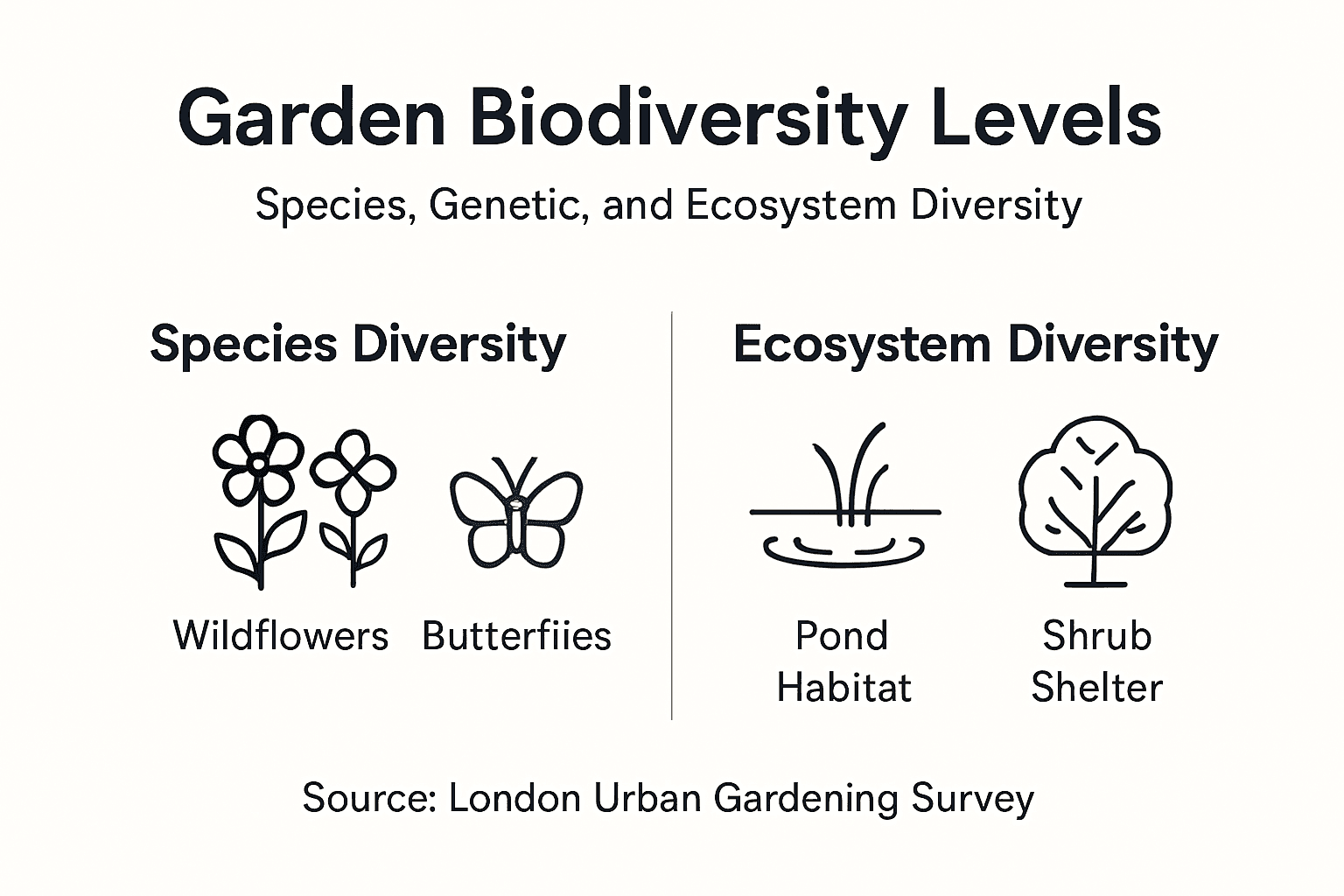
Ecosystem diversity describes the different habitats you create. A pond supports aquatic life, shrubs provide shelter for insects, and log piles create microhabitats. Each environment serves a specific purpose.
For affluent South East London homeowners, this isn’t abstract theory. These three layers directly influence whether your garden thrives, requires constant maintenance, or becomes largely self-sustaining.
To help distinguish the levels of garden biodiversity, here is a summary table clarifying their purpose and impact:
| Level of Biodiversity | What It Means | Example in London Garden |
|---|---|---|
| Species Diversity | Variety of plant and animal species | Butterflies, wildflowers, soil fungi |
| Genetic Diversity | Variations within a single species | Multiple cultivars of native plants |
| Ecosystem Diversity | Range of habitats and environments | Pond, woodland, shrub borders |
Why Urban Biodiversity Matters Specifically
London’s rapid biodiversity loss means gardens have become critical refuges for wildlife that has nowhere else to go. Urban residents often feel disconnected from nature, yet your garden can reverse that—you’re creating a living, breathing sanctuary on your own property.
Native and non-native plants work together in urban settings. The key distinction is understanding which species support local wildlife and which serve primarily aesthetic functions. Both have their place in thoughtful design.
When you increase biodiversity, your garden naturally becomes more resilient:
- Pest populations self-regulate when predators move in
- Plant health improves with beneficial microorganisms in healthy soil
- Seasonal interest remains consistent throughout the year
- Maintenance demands decrease as ecosystems balance themselves
- Property value increases through sophisticated landscape appeal
A genuinely biodiverse garden requires less chemical intervention, less frequent replanting, and delivers more consistent visual beauty across seasons.
The concept connects directly to sustainable urban gardening practices that balance luxury with ecological responsibility. Your garden becomes both a personal retreat and an active participant in London’s urban ecosystem recovery.
Many wealthy homeowners initially resist this approach, believing that hand-selected specimens and manicured perfection represent status. Yet the opposite proves true—designing gardens that support genuine biodiversity demonstrates sophisticated environmental stewardship and personal security in aesthetic taste.
Pro tip: Start by observing what wildlife already visits your garden in spring and summer, then choose additional plants specifically to feed and shelter those species rather than imposing a predetermined design.
Types of Garden Biodiversity and Distinctions
Garden biodiversity isn’t one-size-fits-all. Different habitat types support completely different communities of plants and animals. Your South East London garden can host multiple distinct ecosystems, each contributing something unique to the whole.
Understanding diverse habitat types in gardens helps you create layered spaces where different species thrive. The more varied your habitats, the more resilient and biodiverse your garden becomes.
Primary Habitat Types in Urban Gardens
Most London gardens can incorporate several distinct habitat zones:
- Grassland and meadow areas support wildflowers, ground-nesting insects, and seed-eating birds
- Shrub beds and hedges provide shelter, nesting sites, and berries for wildlife
- Pond and water features create aquatic habitats for amphibians, dragonflies, and water beetles
- Woodland plantations and trees offer canopy cover, food sources, and vertical structure
- Flower borders attract pollinators and provide seasonal colour through different blooming cycles
- Log piles and dead wood decompose slowly, supporting fungi and invertebrates
Each habitat works best when deliberately designed rather than accidentally created. A thriving meadow requires different management than a shrub border. A pond needs specific depth zones to support various aquatic life.
Flora and Fauna Biodiversity
Your garden will naturally host diverse species including butterflies, amphibians, reptiles, birds and mammals. These aren’t separate from plant biodiversity—they’re interconnected.

Floral diversity includes native wildflowers, cultivated ornamental shrubs, specimen trees, and climbing plants. Each plant type serves different wildlife. Native plants support indigenous insects that birds depend on. Ornamental shrubs may bloom when native plants rest, extending the food calendar year-round.
Faunal diversity encompasses visible creatures like birds and butterflies alongside hidden populations of soil organisms, fungi, and microbes. The microorganisms matter most for garden health, though nobody sees them.
Why These Distinctions Matter for Design
Wealthy homeowners often assume they must choose between biodiversity and aesthetic sophistication. This distinction separates successful gardens from struggling ones.
A garden designed with conscious habitat variety becomes naturally beautiful. Native wildflower meadows offer soft, romantic textures. Pond reflections add visual depth. Mature trees create structure and drama. Strategic shrub placement creates privacy and shelter simultaneously.
The opposite occurs when you impose a predetermined design without considering habitat distinctions. Monoculture plantings require constant intervention, look static across seasons, and support minimal wildlife.
Gardens with distinct habitat types require less maintenance while delivering superior visual interest and wildlife activity throughout the year.
When planning with garden design principles, consider how each zone creates specific conditions. Wet areas near ponds differ dramatically from drier shaded zones under established trees. Understanding these distinctions allows you to plant appropriately and support distinct communities naturally.
Connectivity matters too. Isolated habitat patches support fewer species. Gardens connected to parks, green corridors, or neighbours’ gardens multiply biodiversity impact exponentially.
Pro tip: Map your existing garden’s light levels, moisture, and soil conditions before adding new habitats—this ensures your design works with natural site conditions rather than fighting them.
Benefits for Property, Nature, and Wellbeing
A biodiverse garden isn’t just environmentally responsible—it’s a smart investment that pays dividends across three critical areas. Your property, the local ecosystem, and your personal health all benefit simultaneously from thoughtful biodiversity design.
This alignment is rare. Most home improvements sacrifice one benefit for another. Biodiverse gardens deliver all three.
Property Value and Market Appeal
Affluent South East London buyers increasingly seek gardens with genuine character and ecological credibility. A manicured lawn surrounded by box hedges signals one thing. A sophisticated, wildlife-rich garden signals something entirely different.
Biodiverse gardens appreciate faster because they:
- Create visual interest across all seasons through varied plantings
- Require less ongoing maintenance and chemical intervention
- Demonstrate environmental sophistication to potential buyers
- Offer functional outdoor living spaces with natural privacy
- Support property valuations through landscape maturity and established plantings
Properties in London with mature, biodiverse gardens command measurable premiums. Buyers recognise that a thoughtfully designed ecosystem represents years of development they won’t need to replicate.
Nature and Ecosystem Services
Your garden becomes a vital refuge providing food, shelter and movement corridors for wildlife in fragmented urban landscapes. This isn’t abstract conservation—it’s active species recovery happening in your own backyard.
Specific ecosystem services improve measurably:
- Pollination: Biodiverse gardens support bee and butterfly populations that pollinate neighbouring properties and local food crops
- Pest regulation: Predatory insects naturally control garden pests, eliminating the need for chemical sprays
- Soil health: Mycorrhizal fungi and microorganisms improve soil structure, water retention, and nutrient cycling
- Air quality: Trees and plants filter particulates and improve local air quality
- Climate mitigation: Vegetation absorbs carbon and reduces urban heat island effects
These services benefit your garden’s productivity whilst strengthening London’s urban ecosystem.
Personal Wellbeing and Mental Health
Scientific research confirms what gardeners intuitively know: time spent in biodiverse gardens improves mental health significantly. Garden greenery encourages physical activity and boosts mental wellbeing whilst creating attractive, restorative outdoor spaces.
The benefits extend beyond simple relaxation:
- Reduced stress: Natural diversity and wildlife activity lower cortisol levels
- Increased activity: Maintaining varied habitats encourages regular outdoor engagement
- Sense of purpose: Supporting wildlife creates meaningful connection to nature
- Seasonal rhythm: Diverse gardens highlight seasonal changes, reconnecting you to natural cycles
- Social engagement: Thriving gardens become gathering spaces for family and friends
Biodiverse gardens deliver simultaneous benefits to property value, environmental conservation, and personal wellbeing—a combination rarely available in home improvement investments.
This convergence explains why wealthy homeowners increasingly embrace biodiversity-focused design. It’s not sacrifice. It’s multiplication.
Pro tip: Photograph your garden monthly across seasons to document wildlife activity and seasonal changes—this visual record reminds you of the ecosystem’s productivity whilst providing satisfaction from your conservation contribution.
Eco-Friendly Design Strategies for London Spaces
Eco-friendly garden design isn’t about sacrificing luxury or aesthetics. It’s about working with natural systems rather than fighting them, creating gardens that look stunning whilst reducing your environmental footprint.
For affluent South East London homeowners, this represents the pinnacle of sophisticated design—gardens that demonstrate knowledge, restraint, and genuine environmental stewardship.
Water Conservation and Management
Rainwater harvesting transforms how your garden functions. Collecting roof runoff in discrete, attractive systems eliminates reliance on mains water whilst reducing flooding during heavy rainfall.
Implement water conservation through:
- Installing hidden underground cisterns or contemporary above-ground tanks
- Creating permeable surfaces that allow infiltration rather than runoff
- Designing swales and rain gardens that capture and filter water naturally
- Selecting drought-tolerant plants adapted to London’s climate
- Reducing lawn areas in favour of hardscaping and planted borders
Water-wise gardens thrive through smart design rather than constant watering. This approach proves especially valuable during London’s increasingly unpredictable rainfall patterns.
Soil Health and Organic Practices
Healthy soil forms the foundation of successful eco-friendly gardens. Avoiding peat-based compost and chemical fertilisers protects carbon stores whilst building soil structure naturally.
Support soil biodiversity by:
- Composting garden waste and kitchen scraps on-site
- Adding organic matter annually to build soil depth
- Protecting soil from compaction through designated pathways
- Encouraging mycorrhizal fungi that support plant nutrition
- Reducing lawn mowing frequency to allow wildflower growth
Organic gardening practices and chemical avoidance strengthen London’s urban soil ecosystem whilst eliminating synthetic pesticides that harm beneficial insects.
Native Plants and Wildlife Support
Native and climate-appropriate species thrive in London conditions whilst supporting local wildlife. These plants evolved here, so they require less intervention and provide food and habitat for insects that birds and mammals depend upon.
Choose strategic planting by selecting species that:
- Flower across different seasons, extending wildlife food availability
- Produce seeds and berries for autumn and winter feeding
- Provide shelter through dense structure and evergreen foliage
- Support specific pollinators and beneficial predators
- Establish gradually, creating mature landscapes over time
Incorporating trees and diverse native plantings enhances carbon capture whilst building climate resilience throughout your garden and neighbouring properties.
Carbon and Climate Impact
Your garden actively works to reduce London’s carbon footprint through vegetation that captures atmospheric carbon whilst creating cooling effects that counteract urban heat island impacts.
Design for climate resilience by:
- Establishing mature trees that provide shade and air filtration
- Increasing planting density to maximise carbon sequestration
- Reducing hard landscaping that absorbs and radiates heat
- Creating green walls and climbing plants on structures
- Designing spaces that reduce energy demands for temperature control
Eco-friendly gardens demonstrably reduce carbon footprint whilst increasing property appeal—environmental responsibility and luxury align completely.
This convergence explains why leading London landscape designers prioritise ecological design. It’s not compromise. It’s evolution.
Pro tip: Conduct a soil test before redesigning—understanding your baseline pH, nutrients, and structure allows you to amend intelligently rather than imposing generic solutions.
Common Mistakes Undermining Garden Biodiversity
Well-intentioned garden design often inadvertently destroys the very biodiversity it aims to support. The most damaging mistakes stem from traditional landscaping practices that prioritised aesthetics over ecology.
Understanding these pitfalls helps you avoid them. Most affluent homeowners don’t realise their garden maintenance routines are actively harming wildlife populations.
Chemical Dependency and Pesticide Use
Synthetic pesticides and herbicides represent the single most damaging practice in urban gardens. These chemicals eliminate insects indiscriminately, destroying the entire food chain that birds and beneficial predators depend upon.
Chemical use harms biodiversity by:
- Killing pollinators alongside target pests, reducing plant reproduction
- Accumulating in soil and water, affecting non-target organisms
- Disrupting the hormone systems of amphibians and reptiles
- Destroying beneficial insects that naturally control pest populations
- Creating resistance in pest species, requiring ever-stronger applications
Weeds aren’t the enemy. Selective wildflowers support more wildlife than monoculture lawns. Similarly, common garden insects like aphids actually feed birds. Chemical control disrupts these natural relationships entirely.
Over-Manicured Spaces and Habitat Removal
The obsession with tidiness destroys essential habitats. Common garden mistakes often involve excessive neatness removing natural habitats like dead wood, leaf litter, and dense vegetation.
Habitat loss occurs through:
- Removing fallen branches and log piles that shelter insects
- Clearing autumn leaves that protect overwintering creatures
- Pruning shrubs into geometric shapes, eliminating dense shelter
- Installing pristine gravel where soil microbes would thrive
- Eliminating ground-level vegetation where ground-nesting bees live
An immaculate garden is a sterile garden. Biodiversity thrives in apparent disorder—tangled stems, scattered leaves, and decaying wood create the conditions that support thriving ecosystems.
Poor Plant Selection and Lack of Natives
Exotic ornamentals often look beautiful but provide no food or shelter for local wildlife. A garden filled with non-native species is ecologically empty, regardless of aesthetic appeal.
Plant selection mistakes include:
- Choosing exotic plants unsuitable for local wildlife
- Avoiding native species because they look “ordinary”
- Selecting sterile cultivars that produce no seeds or berries
- Creating monocultures of single species
- Neglecting seasonal interest that supports wildlife year-round
Native plants evolved alongside local insects, birds, and mammals. They provide authentic food sources. Exotic alternatives, no matter how gorgeous, cannot substitute for this evolutionary relationship.
Soil Compaction and Loss of Diversity
Excessive foot traffic and soil compaction undermine biodiversity by crushing the microorganisms and invertebrates that form the garden’s living foundation.
Heavy traffic damages soil by:
- Compacting structure, reducing water infiltration and air availability
- Crushing mycorrhizal fungi networks supporting plant nutrition
- Killing invertebrates that aerate soil and decompose organic matter
- Creating hardpan layers that prevent root penetration
- Reducing the habitat for ground-dwelling beneficial insects
Designated pathways protect soil biodiversity whilst allowing access. Gardens are active ecosystems, not museums to be viewed from a distance.
Most garden biodiversity damage stems from traditional practices—not from neglect, but from overly aggressive intervention and control.
This distinction matters profoundly. Creating biodiverse gardens requires doing less, not more.
A quick reference table contrasts common garden mistakes undermining biodiversity and their ecological consequences:
| Mistake | Ecological Consequence | Best Practice Recommendation |
|---|---|---|
| Chemical pesticide use | Loss of pollinators and microbes | Avoid synthetic chemicals |
| Over-manicured spaces | Destruction of vital habitats | Leave log piles and leaf litter |
| Poor plant selection | Minimal wildlife support | Choose native and flowering plants |
| Soil compaction | Reduced soil health and life | Install paths to protect soil |
Pro tip: Leave one “messy” corner untouched for an entire season—you’ll be surprised by the wildlife activity that thrives without intervention, revealing which practices genuinely support biodiversity.
Elevate Your London Garden with True Biodiversity and Eco-Luxury
Creating a garden that genuinely supports biodiversity while delivering luxury is no easy task. Challenges like balancing habitat variety, native planting, and eco-friendly maintenance can feel overwhelming but are essential to transforming your garden into a resilient, self-sustaining sanctuary. Wicked Gardens LTD specialises in helping South East London homeowners overcome these very hurdles by blending sophisticated design with ecological expertise. We focus on habitat diversity, native plant selection, and organic gardening practices so your outdoor space thrives visually and environmentally.
Explore how our bespoke services can bring the principles of sustainable, biodiverse garden design discussed in Gardening Archives – Wicked Gardens to life at your home. Whether you need expert planting, eco-friendly landscaping, or ongoing maintenance that reduces chemicals and nurtures wildlife, Wicked Gardens LTD provides tailored solutions. Start building your dream garden with visionary design and responsible care today by visiting Wicked Gardens LTD. Unlock the full potential of your garden and enjoy a beautiful eco-luxury retreat that grows stronger every season.
Frequently Asked Questions
What is biodiversity in gardens?
Biodiversity in gardens refers to the variety of living organisms within a garden space, including different species of plants, animals, and microorganisms. It plays a crucial role in maintaining a healthy ecosystem.
Why is urban biodiversity important?
Urban biodiversity is essential as it provides critical habitats for wildlife, supports ecological balance, and offers mental health benefits to residents by reconnecting them with nature.
How can I increase biodiversity in my garden?
You can increase biodiversity by incorporating a variety of native plants, creating various habitats like ponds or meadows, and avoiding the use of chemical pesticides. Additionally, letting some areas remain untidy can support local wildlife.
What are the benefits of a biodiverse garden?
A biodiverse garden can enhance property value, improve air quality, boost local wildlife populations, and provide personal wellbeing benefits, such as reduced stress and increased physical activity.