
Many Greenwich and Blackheath homeowners wonder why their gardens rarely match the refined style of their interiors. In these sought-after neighbourhoods, a well-staged garden does more than impress visitors—it extends your living space and underscores your property’s luxury status. For those who value both sophistication and sustainability, bespoke garden staging offers a path to an outdoor retreat that is genuinely your own, while demonstrating your commitment to eco-friendly, tailored design.
Table of Contents
- Garden Staging Defined And Common Misconceptions
- Types Of Garden Staging For London Properties
- Key Features Of Bespoke And Sustainable Garden Staging
- Regulatory Requirements And Safety Practices In UK Landscaping
- Costs, Pitfalls, And Alternatives For Garden Staging
Key Takeaways
| Point | Details |
|---|---|
| Understanding Garden Staging | Garden staging is about enhancing the natural characteristics of outdoor space, focusing on clarity, functionality, and aesthetics rather than creating an artificial environment. |
| Addressing Common Misconceptions | Staging does not require expensive investments or redesign; it can be achieved through strategic adjustments using existing elements to improve enjoyment and appeal. |
| Tailored Approaches for Property Types | Different properties in London demand specific staging strategies, taking into consideration the unique characteristics of terraced houses, detached homes, flats, and period properties. |
| Sustainable Practices | Bespoke garden staging should incorporate sustainable materials and practices that enhance the garden’s beauty while contributing to environmental health and longevity. |
Garden staging defined and common misconceptions
Garden staging is the strategic process of preparing your outdoor space to showcase its full potential to prospective buyers or simply to maximise its appeal and functionality. It’s not about creating a false impression; it’s about removing clutter, highlighting architectural features, and presenting your garden as a desirable extension of your home.
Unlike interior staging, which focuses on furniture arrangement and décor, garden staging works with the natural landscape itself. You’re curating the space to demonstrate how buyers will actually use it. This might mean clearing sightlines to a rear fence, highlighting specimen plants, or creating defined entertaining areas.
What Garden Staging Really Is
A proper garden possesses several defining qualities. Gardens have specific spatial and ecological characteristics that establish their identity beyond mere outdoor space. This includes three-dimensionality, clear boundaries, human scale proportions, temporal dynamism, ecological interactions, designed intent, maintenance requirements, and aesthetic engagement.
When you stage a garden, you’re accentuating these qualities. You’re making them visible and compelling.
- Clarifying spatial flow and sightlines
- Emphasising mature specimens and architectural plantings
- Creating functional zones (entertaining, dining, relaxation)
- Removing visual clutter and overgrowth
- Enhancing pathways and access routes
- Highlighting unique features or views
Common Misconceptions About Garden Staging
Many affluent homeowners in Blackheath and Greenwich hold misconceptions about what garden staging actually involves. Here are the most persistent myths:
Myth 1: Garden staging means creating an artificial, manicured space.
Reality: You’re revealing the garden’s natural character, not fabricating one. A staged garden feels lived-in and authentic, not sterile.
Myth 2: It requires expensive new plants or complete redesign.
Reality: Staging works with what you have. Strategic pruning, mulching, and arrangement often transform a space dramatically without major investment.
Myth 3: It’s only necessary when selling your home.
Reality: Staging improves daily enjoyment of your garden. Better flow, clearer zones, and reduced visual clutter benefit you immediately.
Myth 4: Professional garden staging is a modern trend with no substance.
Reality: The principles of garden design and space optimisation have centuries of historical precedent. Historic garden cities and modern residential design both emphasise purposeful spatial arrangement.
Proper garden staging reveals what’s already exceptional about your outdoor space rather than trying to create something artificial.
Pro tip: Start garden staging with a clear photographic record of your current space from multiple angles and times of day, then create a simple sketch identifying key views, mature plants, and natural focal points you want to emphasise.
Types of garden staging for London properties
Different London properties require distinctly different staging approaches. A Victorian terraced house in Greenwich demands something entirely different from a contemporary Blackheath flat or a period townhouse. The staging strategy must align with your property type, its character, and what buyers expect to see.
Understanding your property type is the foundation for effective staging. The outdoor space should feel like a natural extension of your home’s interior, not a disconnected afterthought.
Terraced Houses and Semi-Detached Properties
Terraced houses dominate South East London. You likely have a narrow rectangular garden with established boundaries—this is actually an advantage for staging.
Focus on these elements:
- Creating defined zones along the garden’s length (seating, entertaining, planting areas)
- Drawing the eye toward the rear boundary with specimen plants or focal points
- Clearing sightlines through the middle to emphasise depth
- Highlighting mature trees or architectural features (fencing, raised beds)
- Ensuring pathways feel intentional and accessible
The key is making the space feel purposeful rather than just empty. A narrow garden can feel longer when zones are staggered and layered.
Detached Homes and Larger Properties
Detached properties around Blackheath often have more substantial gardens. The challenge shifts from creating perceived depth to organising multiple functional areas cohesively.
Strategic planting ideas for London gardens help define separate zones whilst maintaining visual flow. Consider:
- Specimen planting to frame entertaining spaces
- Multiple seating or entertaining zones with varying purposes
- Screening plantings to create privacy from neighbours
- Pathways connecting different areas naturally
- Feature lighting to enhance evening appeal
The goal is demonstrating how the entire space functions as a cohesive whole.
Flat Gardens and Courtyard Spaces
Flat residents often have compact outdoor space: patio gardens, courtyards, or small decked areas. These spaces require careful curation—every element should earn its place.
Tailored staging techniques suited to distinct property types emphasise that compact spaces benefit from minimalism and intentionality.
Focus on:
- Maximising vertical interest with wall plantings or climbing plants
- Selecting quality over quantity in furnishings and plants
- Ensuring clear, uncluttered pathways through the space
- Creating one strong focal point (water feature, specimen plant, or seating area)
- Using containers strategically to define zones
Small spaces staged well feel luxurious and intimate, not cramped.
Period Properties and Listed Buildings
Victorian and Georgian homes require staging that respects their heritage. Your garden should complement the property’s architectural character, not fight against it.
Consider:
- Sympathetic planting schemes reflecting the property’s era
- Maintaining historic features (period walls, original paths) rather than masking them
- Restoring sight lines to architectural details
- Using traditional materials where possible
Effective garden staging aligns your outdoor space with your property’s character, making the entire home feel cohesive and intentionally designed.
Pro tip: Photograph your property type specifically—detached homes need images showing the full garden context, whilst terraced houses benefit from shots that emphasise depth and the journey through space.
Here is a summary of staging focus areas for various London property types:
| Property Type | Main Staging Focus | Key Challenge |
|---|---|---|
| Terraced/Semi-Detached | Defined zones, depth creation | Maximising narrow space |
| Detached/Larger Homes | Multiple cohesive areas | Organising expansive gardens |
| Flats/Courtyards | Vertical interest, minimalism | Preventing clutter in small area |
| Period/Listed Buildings | Heritage-appropriate materials | Respecting original character |
Key features of bespoke and sustainable garden staging
Bespoke garden staging goes beyond generic landscaping—it’s about crafting a space that feels authentically yours whilst meeting the highest sustainability standards. For affluent homeowners in Blackheath and Greenwich, this means marrying luxury with responsibility.
True bespoke staging combines tailored design with environmental consciousness. The result is a garden that enhances your property’s appeal whilst aligning with your values.
Customisation to Your Lifestyle
Bespoke garden staging means designing specifically for how you actually live. Not every family needs the same garden layout, planting scheme, or entertaining space.
Consider these customisation angles:
- Multifunctional zones tailored to your household (children’s play, work-from-home outdoor office, entertaining spaces)
- Planting schemes reflecting your aesthetic preferences and maintenance tolerance
- Materials chosen for durability and performance in London’s climate
- Hardscaping (decking, paving, fencing) designed to your exact specifications
- Lighting, irrigation, and technology integrated seamlessly
Bespoke garden buildings and outdoor structures increasingly transform gardens into extensions of living space, offering work, leisure, and wellness functions tailored to individual homeowner lifestyles.
Sustainability as Standard, Not Option
Sustainable garden staging isn’t a premium add-on—it should be your baseline. This means selecting materials, plants, and practices that support environmental health whilst delivering visual impact.
Key sustainable features include:
- Native and pollinator-friendly planting supporting local ecosystems
- Porous hardscaping allowing rainwater infiltration
- Electric irrigation systems with moisture sensors reducing water waste
- Sustainably sourced materials (FSC timber, recycled paving)
- Composting and garden waste management systems
- Reduced maintenance requirements through intelligent plant selection
Eco-Friendly Materials and Finishes
Materials tell a story about your home’s values. Choosing responsibly sourced timber, recycled aggregates, and low-impact finishes demonstrates commitment to quality and sustainability.
Wicked Gardens prioritises materials that perform beautifully whilst minimising environmental footprint. This might mean specifying FSC-certified decking, permeable paving solutions, or locally sourced stone for raised beds.
Integration with Your Home’s Architecture
Bespoke staging ensures your garden complements your property’s character. A Victorian townhouse demands different materials and planting than a contemporary flat, and a period home requires historically appropriate choices.
Sustainable garden design approaches consider your property’s age, architectural style, and neighbourhood context, creating cohesion between house and garden.
Long-Term Resilience
Sustainable staging prioritises durability and adaptability. Quality materials, thoughtful design, and proper installation ensure your staged garden remains beautiful and functional for years.
This means:
- Investing in quality rather than trendy, short-lived solutions
- Designing for climate resilience (drought-tolerant planting, improved drainage)
- Selecting plants and structures that age gracefully
- Planning for future maintenance and updates
Bespoke, sustainable garden staging creates spaces that feel effortlessly luxurious whilst positively contributing to environmental stewardship.
Pro tip: Request a sustainability audit before staging begins—identify opportunities to reduce water consumption, increase biodiversity, and source locally, then integrate these improvements into your overall design plan.
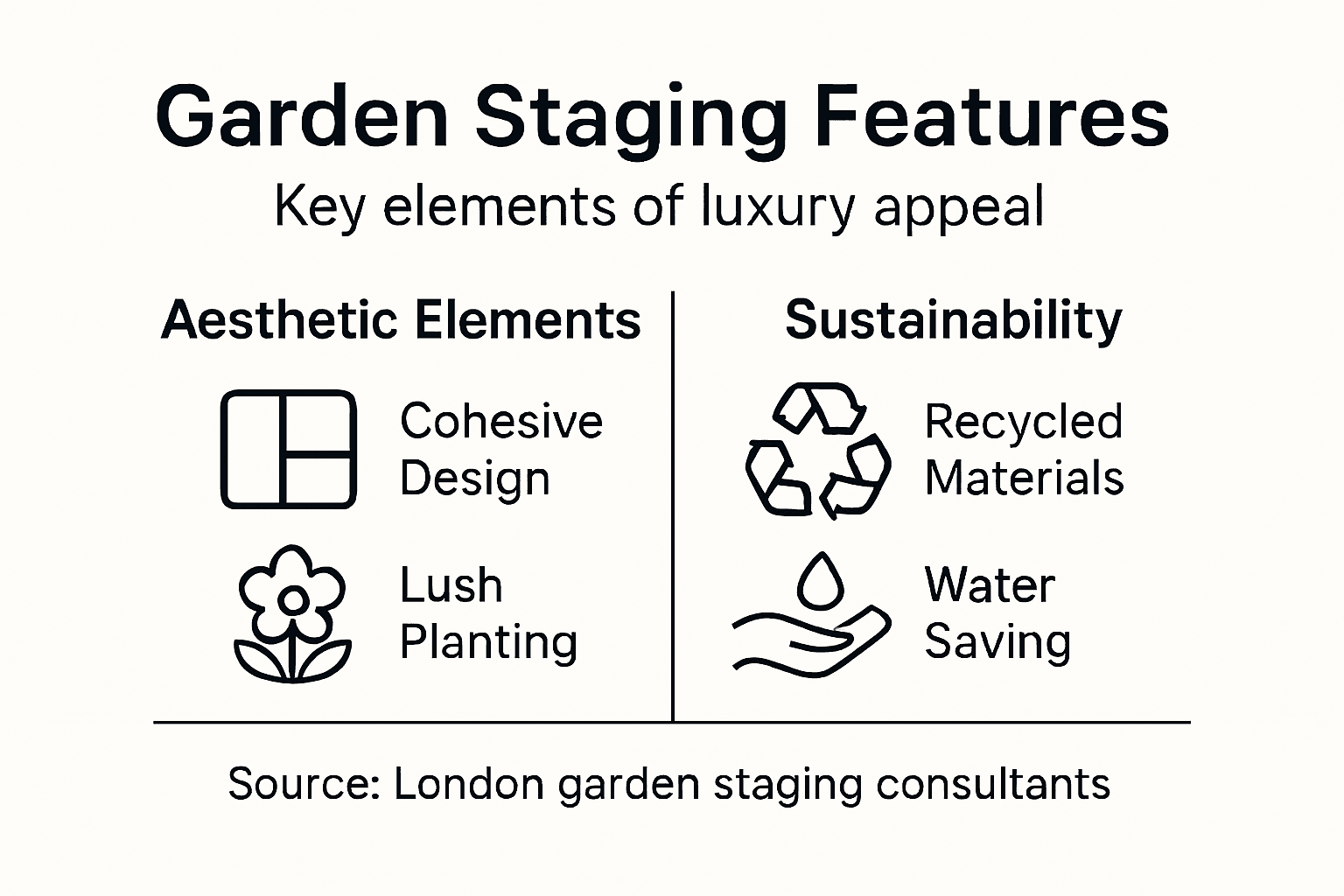
The following table compares the impact of bespoke and sustainable staging features:
| Feature | Visual Benefit | Sustainability Impact |
|---|---|---|
| Native/pollinator planting | Enhanced seasonal interest | Supports local biodiversity |
| FSC-certified and recycled materials | High-quality, tactile finishes | Minimises resource footprint |
| Porous hardscaping and smart irrigation | Improved garden functionality | Conserves water, manages runoff |
| Long-lasting design elements | Timeless, elegant appearance | Reduces future replacements |
Regulatory requirements and safety practices in UK landscaping
When you hire a landscaper for garden staging work, you’re entering a regulated industry with strict legal requirements. Understanding these safeguards protects both you and the professionals transforming your outdoor space.
UK landscaping is governed by health and safety laws designed to protect workers, clients, and the environment. Professional operators must comply with these standards without exception.
Construction (Design and Management) Regulations 2015
The CDM Regulations apply to most landscaping projects, particularly those involving structural work, tree removal, or significant ground works. These regulations establish duties for clients, contractors, and designers.
As a homeowner, you have specific responsibilities:
- Ensuring contractors hold appropriate insurance and qualifications
- Communicating any site hazards (underground utilities, structural concerns)
- Allowing adequate time and resources for safe work practices
- Checking that contractors maintain health and safety standards throughout the project
Health and safety guidance for landscaping operations covers Construction (Design and Management) Regulations, risk assessments, safe machinery use, site protocols, and environmental protection requirements all UK landscapers must follow.
Risk Assessment and Site Safety
Professional landscapers conduct formal risk assessments before starting work. This identifies potential hazards (electrical lines, unstable ground, trip risks) and establishes mitigation strategies.
You should expect:
- Written risk assessments provided before work begins
- Clear communication about site hazards and exclusion zones
- Proper signage and protective barriers during work
- Regular safety inspections throughout the project
- Documentation of all safety measures taken
This transparency demonstrates a contractor’s professionalism and commitment to your property’s security.
Equipment and Machinery Standards
Landscaping involves potentially dangerous equipment: chainsaws, excavators, shredders, and powered tools. All machinery must be properly maintained, operated by trained personnel, and used according to manufacturer specifications.
Reputable contractors maintain detailed equipment maintenance logs and ensure operators hold relevant certifications.
Environmental and Waste Regulations
Garden staging often generates waste: soil, plant material, old fencing, or paving. UK regulations require proper waste management and disposal.
This means:
- Appropriate segregation of waste types (green waste, inert, hazardous)
- Disposal at licensed facilities
- Compliance with Environmental Protection Act requirements
- Responsible handling of any chemicals or treated materials
Insurance and Professional Accreditation
Always verify your landscaper carries public liability insurance (minimum £6 million for most residential work) and employer’s liability insurance if they have staff.
Look for membership with recognised bodies like the British Association of Landscape Industries (BALI), which signifies compliance with industry standards.
Regulatory compliance isn’t bureaucratic burden—it protects your investment, ensures worker safety, and guarantees environmental responsibility.
Pro tip: Request certificates of insurance, evidence of accreditation, and copies of risk assessments before work begins, then retain these documents for your property records and future reference.
Costs, pitfalls, and alternatives for garden staging
Garden staging requires investment, but the returns often justify the outlay. However, cutting corners on budget staging can actually damage your property’s appeal rather than enhance it.
Understanding the true costs and avoiding false economies helps you make strategic decisions about your garden transformation.
Realistic Staging Costs in the UK Market
Garden staging costs in the UK typically range from modest styling to comprehensive transformation. Basic styling interventions cost between £300 and £1,500, whilst full-scale staging with furniture, plantings, and professional design ranges from £1,200 to £4,000 or more depending on garden size and scope.
For luxury properties in Blackheath and Greenwich, bespoke staging often costs more but delivers proportionally greater returns.
Typical investment areas include:
- Professional design consultation and planning (£500–£2,000)
- Strategic planting and specimen plants (£800–£3,000)
- Hardscaping work: decking, paving, or raised beds (£2,000–£8,000+)
- Feature elements: lighting, water features, seating (£1,000–£5,000)
- Ongoing maintenance during marketing period (£200–£500 monthly)
The False Economy of Budget Staging
Opting for cheap staging solutions in affluent properties often backfires. Poor-quality furniture, mismatched décor, and inappropriate scale can undermine rather than enhance buyer perception and may actually reduce final sale price.
Common budget staging pitfalls:
- Oversized or undersized furniture that distorts spatial perception
- Generic plantings that lack impact or definition
- Visible wear on surfaces, cheap materials, or poor maintenance
- Clashing aesthetic choices suggesting poor property stewardship
- Incomplete work leaving the garden looking half-finished
Buyers in the luxury market notice these details immediately. Poor staging damages credibility.
Strategic Alternatives to Full Staging
Not every property requires comprehensive staging. Consider these targeted alternatives:
Selective Enhancement: Focus budget on your garden’s strongest features—perhaps professional mulching, specimen plant addition, and clear sightline restoration rather than complete redesign.
Maintenance-First Approach: Sometimes excellent maintenance (professional cleaning, pruning, lawn care) delivers 80% of staging benefits at 20% of cost.
Professional Photography Only: High-quality garden photography combined with minimal physical staging can effectively showcase appeal to remote buyers.
Phased Staging: Begin with low-cost improvements (clearing clutter, defining zones, strategic planting) before committing to expensive hardscaping.
Return on Investment
Staging yields measurable returns. Properties benefit from faster sales, higher offers, and stronger buyer emotional engagement with the space. For luxury homes, staging investment typically returns 50–100% of costs through improved sale price.
The key is matching investment level to your property type and market positioning.
Strategic garden staging is an investment that typically returns more through faster sales and higher offers than the initial cost.
Pro tip: Before committing to expensive staging, obtain competitive quotes from at least three professionals and request before-and-after examples from comparable properties in your area.
Elevate Your London Garden with Bespoke Staging Solutions
If you are inspired by the transformative power of garden staging but unsure how to bring clarity to your garden’s flow, define functional zones, or select sustainable materials that truly complement your property’s character, Wicked Gardens LTD offers expert, personalised solutions tailored to your lifestyle. We understand the challenges discussed in the article such as maximising narrow terraced gardens, orchestrating multiple zones in larger detached homes, and achieving eco-friendly luxury without unnecessary expense.
Our bespoke garden design and landscaping services emphasise:
- Sustainable practices including FSC-certified materials and native planting
- Seamless integration with your property’s architecture
- Multi-functional outdoor spaces that enrich your daily life
Discover how you can enhance your garden’s natural character and boost your home’s appeal with expert staging crafted for discerning London homeowners. Visit Wicked Gardens LTD to explore our bespoke garden design and sustainable landscaping solutions today. Take the first confident step towards a luxurious, eco-conscious garden that captivates buyers and delights your family all year round.
Frequently Asked Questions
What is garden staging?
Garden staging is the process of preparing your outdoor space to showcase its full potential to prospective buyers by removing clutter, emphasising key features, and presenting the garden as an extension of the home.
How does garden staging differ from interior staging?
Unlike interior staging, which focuses on furniture arrangement and décor, garden staging works with the natural landscape to create functional zones, highlight mature plants, and improve visual flow.
What are the common misconceptions about garden staging?
Common misconceptions include the belief that it involves creating an artificial space, requires expensive new plants, is only needed when selling a home, and that it is a modern trend without substance.
What are some key features of bespoke garden staging?
Bespoke garden staging includes tailored design for specific lifestyles, sustainable materials, respect for architectural character, and long-term resilience to ensure the garden remains appealing and functional over time.