
Transforming your South East London garden into a lush, luxury retreat starts with understanding the unique demands of your outdoor space. The journey to a flawless, vibrant lawn hinges on expert preparation, premium turf choices, and sustainable methods that respect both your lifestyle and the environment. Whether you dream of an immaculate green for entertaining or a haven that promotes biodiversity, these steps deliver enduring results with a touch of sophistication.
Table of Contents
- Step 1: Assess And Prepare Your Garden Area
- Step 2: Select And Source Premium, Eco-Friendly Turf
- Step 3: Install And Lay Turf For Seamless Integration
- Step 4: Water And Care For Newly Laid Turf
- Step 5: Inspect And Maintain For Long-Lasting Results
Quick Summary
| Key Point | Explanation |
|---|---|
| 1. Assess soil and drainage first | Conduct soil tests and drainage assessments to ensure proper lawn establishment before turf installation. |
| 2. Choose suitable turf varieties | Consider garden conditions and intended lawn use when selecting turf to ensure long-term success and ease of maintenance. |
| 3. Install turf with precision | Lay turf in a staggered pattern, ensuring seams are tight and contact with soil is firm for optimal root establishment. |
| 4. Maintain consistent watering schedule | Water thoroughly to keep soil moist but not waterlogged, particularly during the first few weeks after installation. |
| 5. Inspect and maintain regularly | Monthly checks for weeds and irregular growth keep your lawn healthy and prevent small issues from becoming bigger problems. |
Step 1: Assess and prepare your garden area
Before you even think about purchasing turf, you need to understand what you’re working with. Your garden’s soil quality, drainage, and current condition will determine whether your new lawn thrives or struggles. Spend a day assessing your space properly, and you’ll save yourself months of frustration later.
Start by digging deep into your soil. Create a few test holes across different areas of your garden, going down about 20-25cm. This reveals soil composition, compaction levels, and what you’re truly dealing with. Next, perform a drainage test by filling these holes with water and observing how quickly they drain. If water disappears within 4 hours, your drainage is sound. If it lingers, you have a problem that needs addressing before laying turf.
Test your soil pH as well. You want it in the range of 6.0 to 7.0 for optimal grass growth. A simple soil test kit from any garden centre will tell you this. If your pH is off, amending soil with lime or sulphur brings it back into balance. This step takes only days but delivers significant results.
Now clear your garden thoroughly. Remove existing grass, weeds, and debris. For stubborn perennial weeds, you may need multiple applications of glyphosate to eliminate them completely. Don’t skip this part—weeds will compete with your new turf and you’ll regret it. Once cleared, loosen the compacted soil by digging and incorporate well-rotted organic matter like manure or compost. This improves moisture retention and structure.
Level your surface carefully. Uneven ground creates drainage problems and makes mowing difficult. Add topsoil or compost to create a smooth, even base. This is especially critical if you have clay soil, which benefits enormously from added organic matter.
Allow adequate time for these preparations. Complete soil work well before you plan to lay turf, and avoid laying during extreme weather conditions. Your roots need time to establish properly.
Proper soil preparation is the foundation of a luxurious lawn—skip it, and no amount of quality turf will compensate.
Pro tip: Test your drainage at least a week before ordering turf; if water pools persist, invest in a drainage solution like French drains or raised beds rather than rushing into turf that will fail.
Step 2: Select and source premium, eco-friendly turf
Now that your garden is prepared, it’s time to choose the right turf. This decision shapes everything about your lawn’s appearance, durability, and environmental impact. The wrong choice means struggling with maintenance or a lawn that simply doesn’t fit your space.
Start by assessing your garden’s specific conditions. Consider how much sunlight different areas receive, your soil type, and drainage capacity. These factors determine which turf varieties will thrive. You have several excellent options to choose from.
- Hardwearing ryegrass for areas with high foot traffic and active use
- Fine lawn turf blends for ornamental, manicured appearance
- Shade-tolerant mixes for areas beneath trees or with limited sunlight
- Wildflower turf for eco-conscious gardeners seeking biodiversity
Think about how you’ll use your lawn. Will children and pets play on it regularly? Are you seeking a pristine, formal appearance? Your intended use directly influences which turf works best. Match your choice to your maintenance capacity as well—some varieties demand more attention than others.
Here’s a quick reference for common turf types and their ideal situations:
| Turf Type | Best For | Maintenance Level | Key Benefit |
|---|---|---|---|
| Hardwearing Ryegrass | Play areas, high use | Moderate | Tolerates foot traffic |
| Fine Lawn Blend | Ornamental, formal | High | Luxurious appearance |
| Shade-Tolerant Mix | Shady spots | Moderate | Grows in low sunlight |
| Wildflower Turf | Eco-conscious gardens | Low | Supports biodiversity |
When sourcing turf, prioritise quality and sustainability. Look for suppliers offering peat-free and eco-friendly blends that support biodiversity whilst delivering strong root growth. Premium turfs often come pre-mixed with soil improvers and fertilisers, giving your lawn an excellent foundation. Known brands with sustainable production practices ensure resilience and longevity.
Request samples before ordering. Seeing the actual turf in your garden’s light helps you make a confident choice. Check the turf’s colour, density, and root structure. Quality turf has established, healthy roots and consistent grass coverage.
Order your turf for delivery just before laying. Fresh turf establishes faster and roots more successfully than turf stored for days. Coordinate your supplier so delivery coincides with your installation schedule.
Quality turf paired with sustainable sourcing practices creates a lawn that looks luxurious whilst respecting the environment.
Pro tip: Request turfs with integrated soil improvers and fertilisers to reduce the additional amendments you’ll need to apply, saving time and ensuring consistent establishment across your entire lawn.
Step 3: Install and lay turf for seamless integration
This is where your preparation pays off. Laying turf properly determines whether your lawn bonds with the soil and establishes strong roots. Rushed installation leads to gaps, poor rooting, and visible joins that spoil the luxury appearance you’re after.
Begin by ensuring your soil base is level and lightly compacted. Walk across the prepared area to settle any high spots or soft patches. Your foundation must be firm but not hard—roots need gentle contact with soil to establish quickly.
Start laying turf in one corner, working systematically across the garden. Use a staggered pattern like brickwork to avoid visible joints running in straight lines. This creates a seamless, professional appearance. As you lay each roll, press it firmly into contact with the soil beneath.
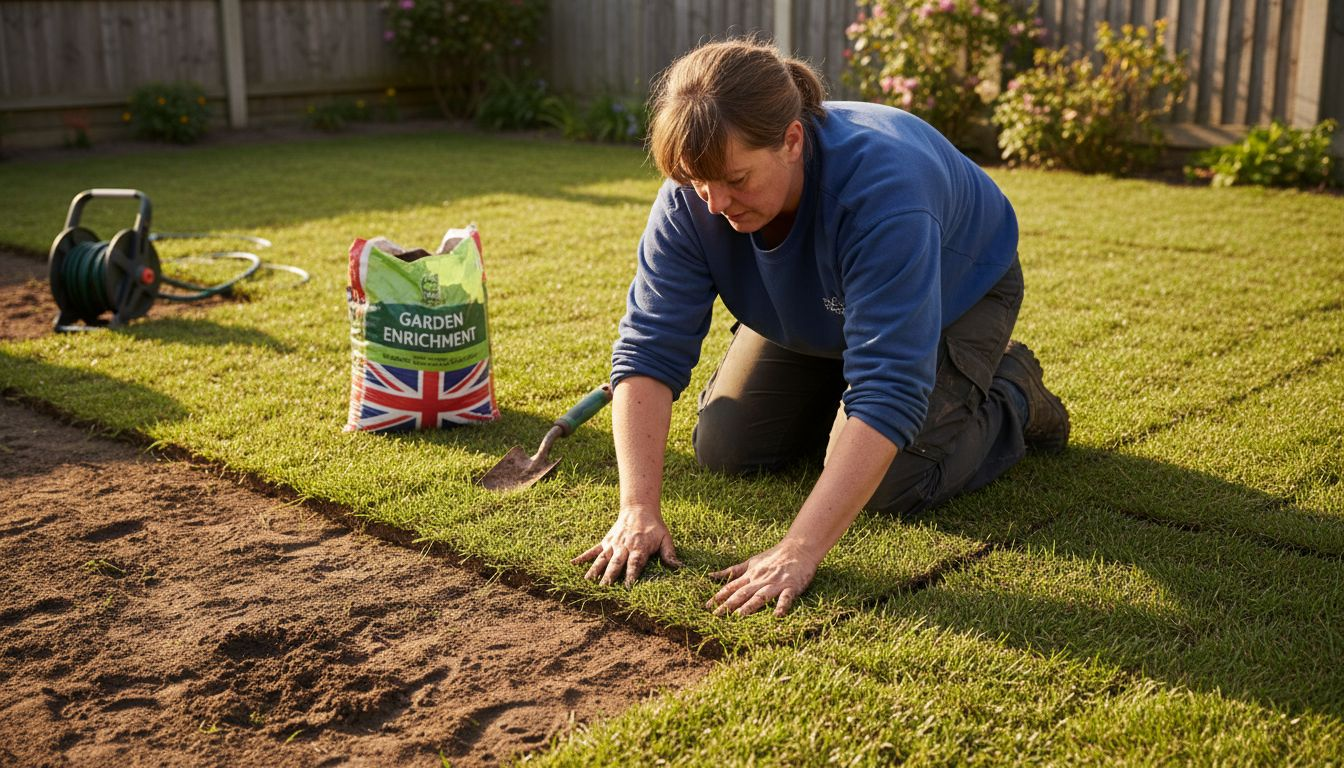
For curves and unusual shapes, cut turf rolls precisely to fit your garden’s contours. Don’t force pieces into awkward spaces—custom cutting prevents gaps and gaps mean weeds and bare patches. Ensure edges are closely fitted with minimal gaps between rolls.
Once laid, take these steps to encourage establishment:
- Water immediately and thoroughly after laying
- Roll over the turf gently to press roots into soil contact
- Water again within 24 hours
- Maintain consistent moisture for the next two to three weeks
Prompt watering after installation maintains moisture levels and helps roots integrate into the soil matrix. Avoid heavy foot traffic during establishment. Your lawn needs minimal disturbance whilst roots develop.
Don’t be tempted to mow immediately. Wait until the turf has rooted firmly—typically three to four weeks. You’ll notice the grass firming up and resisting when you pull on it gently.
Perfect installation creates invisible joins and strong root contact that transforms separate rolls into one unified lawn.
Pro tip: Lay turf on a slightly damp day and water thoroughly immediately after installation; this reduces transplant shock and accelerates root establishment by 7 to 10 days.
Step 4: Water and care for newly laid turf
Your newly laid turf is fragile and demands consistent attention for the first few weeks. Proper watering and care determine whether roots establish strongly or the lawn fails to knit together. This is your critical window for creating a resilient, luxurious lawn.
Watering is your primary focus during establishment. The soil beneath the turf must remain consistently moist but not waterlogged. Deep and regular watering prevents drying out whilst avoiding the pooling that damages roots. Aim to water thoroughly, soaking the soil 10cm deep rather than light daily sprinkles.
Timing matters significantly. Water early in the morning or late in the evening to reduce evaporation and allow maximum absorption. Midday watering wastes water as heat causes it to evaporate before roots benefit. Keeping the soil moist for at least two to three weeks after installation ensures successful establishment, particularly during dry spells.
Below is a summary of watering mistakes to avoid for new turf:
| Mistake | Consequence | Best Practice |
|---|---|---|
| Overwatering | Waterlogging, root rot | Water deeply but infrequently |
| Underwatering | Patchy, weak roots | Keep soil moist, 10cm deep water |
| Midday Watering | Evaporation, dryness | Water early or late in day |
| Inconsistent Routine | Stress, poor establishment | Stick to scheduled soakings |
Protect your lawn during this critical period. Limit foot traffic completely until the turf has rooted firmly. Walking on it compresses soil and disrupts the rooting process. After initial establishment, you can gradually increase use, but stay cautious for the first month.
Mowing requires patience and precision. Resist the urge to mow until grass reaches approximately 5cm in height. When you do mow, trim only about a third of the blade length in your first cut. This encourages dense growth and prevents stress to newly establishing roots.
After the initial two to three weeks, adjust your care routine:
- Reduce watering frequency but water more deeply
- Apply a balanced fertiliser to support healthy growth
- Continue avoiding heavy use until fully rooted
- Establish a regular mowing schedule at the correct height
As roots establish, your lawn becomes increasingly resilient. You’ll notice it firming underfoot and resisting when pulled. Once fully rooted, transition to standard maintenance practices.
Consistent care during establishment transforms bare turf rolls into a thick, healthy lawn that lasts for years.
Pro tip: Set a watering schedule using early morning soakings every two to three days rather than daily light sprinkling; this develops deeper roots and creates a drought-resistant lawn within weeks.
Step 5: Inspect and maintain for long-lasting results
Your lawn is established, but the work doesn’t stop there. Regular inspection and maintenance transform a good lawn into the kind of luxury outdoor space that defines your garden. Staying vigilant catches problems early when they’re easiest to fix.
Inspect your lawn monthly during the growing season. Look for weeds, patches of poor growth, uneven areas, or signs of disease. Early detection of moss, fungal issues, or pest damage means you can address them before they spread. Walk the entire garden systematically rather than relying on casual observation.
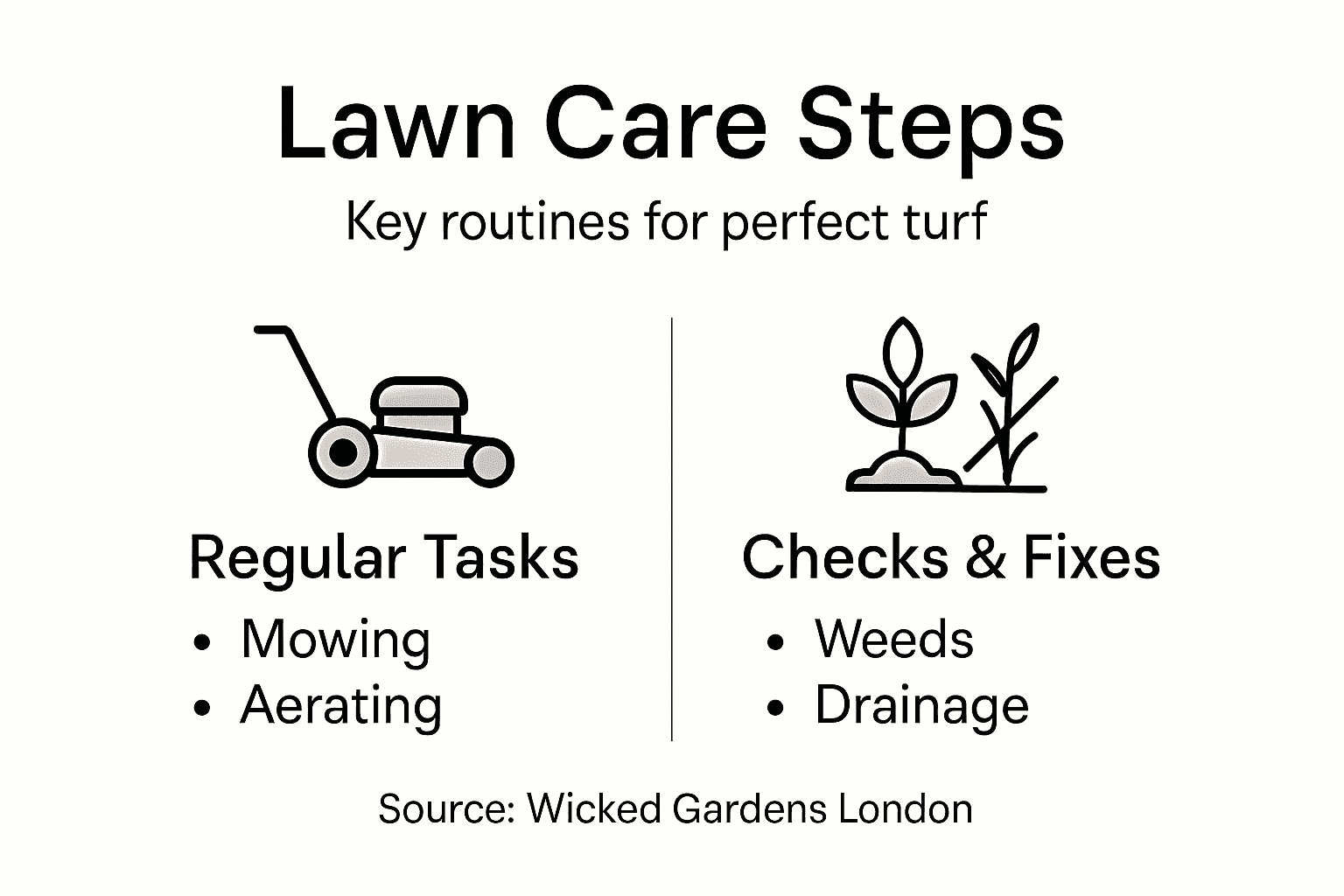
Mowing frequency depends on grass growth and species. Don’t follow a rigid schedule; adjust based on conditions. During peak growing season you may mow weekly, whilst autumn and winter require less frequent cutting. Never cut more than a third of the blade length in one go, as this stresses the grass and invites weeds.
Annual aeration of compacted soils encourages root health and improves drainage. Use a garden fork or aerator to create small holes across the lawn, allowing air, water, and nutrients to penetrate. Spring or autumn are ideal timing for this task.
Top-dressing with compost or sand improves soil structure and fills minor depressions. Apply a light layer once yearly, working it gently into the grass. This enhances drainage and fills ruts caused by wear.
Feed your lawn strategically throughout the year. These maintenance tasks keep your lawn thriving:
- Apply spring fertiliser as growth accelerates
- Use summer feeds formulated for drought tolerance
- Apply autumn fertiliser to strengthen roots before winter
- Clear fallen leaves promptly to prevent disease
- Limit heavy use during winter months
Address problem areas promptly. Small bare patches can be re-seeded or patched with fresh turf. Uneven areas warrant re-levelling or filling. Don’t ignore these issues as they worsen over time.
Consistent inspection and maintenance compounds over years, creating a lawn that improves rather than deteriorates.
Pro tip: Keep a garden maintenance log noting inspection dates, treatments applied, and grass health observations; this reveals patterns and helps you fine-tune your care routine seasonally.
Elevate Your London Garden with Expert Turfing from Wicked Gardens
Creating a luxury lawn in London demands meticulous soil preparation, sourcing premium turf, and expert installation to achieve the flawless finish detailed in our guide. Many gardeners struggle with poor drainage, uneven soil, or turf that fails to establish, which can undermine months of effort. Wicked Gardens offers bespoke, eco-friendly turfing solutions tailored specifically to your garden’s unique conditions, ensuring vibrant growth and seamless integration without the usual frustrations.
Key benefits of partnering with Wicked Gardens:
- Thorough assessment and preparation for optimal soil health
- Selection of sustainable, hardwearing turf blends ideal for London climates
- Precision installation that creates a lush, uniform lawn
- Ongoing care and maintenance plans to protect your investment
Discover how our award-winning team transforms outdoor spaces by combining expert craftsmanship with sustainable practices. Explore more on our Gardening Archives – Wicked Gardens to understand our comprehensive approach.

Don’t let common turfing challenges hold back your dream London lawn. Contact Wicked Gardens today at wickedgardens.co.uk for a personalised consultation and take the first step towards a stunning, resilient garden that complements your lifestyle and values. Your perfect turf awaits.
Frequently Asked Questions
How do I prepare my garden for laying luxury turf?
To prepare your garden for luxury turf, assess your soil quality, drainage, and current condition. Conduct tests on your soil’s composition and drainage capabilities, then clear any existing grass and weeds before loosening the soil and incorporating organic matter.
What type of turf is best for my garden’s conditions?
Choosing the right turf depends on factors like sunlight exposure, foot traffic levels, and soil type. Evaluate your garden’s conditions to select suitable varieties, such as hard-wearing ryegrass for high traffic or fine lawn blends for a formal appearance.
How do I lay the turf correctly for a seamless lawn?
To lay turf correctly, start from one corner of your garden and work in a staggered pattern to avoid visible seams. Ensure each roll is pressed firmly into the soil and avoid large gaps by cutting pieces to fit around shapes and curves.
What kind of maintenance should I perform after laying new turf?
After laying new turf, focus on consistent watering and limiting foot traffic for the first few weeks. Establish a watering schedule to keep the soil moist, and avoid mowing until the grass reaches about 5cm in height for optimal establishment.
How often should I inspect and maintain my lawn?
Inspect your lawn monthly, looking for weeds, poor growth, or signs of disease. Regular maintenance tasks include mowing as needed, aerating compacted soil annually, and top-dressing with compost or sand to enhance soil structure.
When is the best time to fertilise my new lawn?
Fertilise your new lawn strategically at key times throughout the year, such as in spring to promote growth, during summer for drought tolerance, and in autumn to strengthen roots before winter. Aim to apply fertiliser according to your lawn’s specific needs, adjusting based on its performance.