Every garden in South East London tells a story of ambition and renewal. Urban gardening offers affluent homeowners an intelligent way to bring nature and sophistication to city living, weaving sustainability into every design. With multifunctional plant configurations reducing pollution and supporting biodiversity, you discover how elegant green solutions can transform even the most compact spaces into thriving, eco-conscious sanctuaries.
Table of Contents
- Core Concepts And Definition Of Urban Gardening
- Popular Types Of Urban Gardens In London
- Key Features And Sustainable Practices
- Legal Framework And Safety In Urban Gardening
- Costs, Pitfalls And Practical Considerations
Key Takeaways
| Point | Details |
|---|---|
| Urban Gardening Benefits | Transforms urban spaces into sustainable ecosystems through innovative agricultural practices. |
| Diverse Garden Types | Various styles, including rooftop and community gardens, enhance local engagement while providing environmental benefits. |
| Sustainable Practices | Emphasise native plant selection and multi-layered designs to maximise ecological functionality. |
| Legal Compliance | Understanding local regulations is essential for successful urban gardening initiatives. |
Core Concepts and Definition of Urban Gardening
Urban gardening represents a sophisticated approach to transforming city spaces into productive, sustainable ecosystems. It involves cultivating plants, vegetables, and green spaces within metropolitan environments, turning limited urban landscapes into vibrant, resource-generating areas.
At its core, urban gardening goes far beyond traditional agriculture by addressing multiple contemporary challenges. Innovative agricultural technologies enable city dwellers to produce high-value, fresh foods using compact and efficient methods. These strategies are particularly crucial in densely populated areas where traditional farming is impossible.
Key characteristics of urban gardening include:
- Maximising limited spatial resources
- Using vertical and rooftop gardening techniques
- Implementing sustainable growing methods
- Creating microenvironments within city infrastructure
- Reducing carbon footprint through localised food production
Modern urban gardening integrates sophisticated design principles that transform concrete jungles into green, productive spaces. Urban greening strategies now focus on selecting plant species that simultaneously enhance biodiversity, reduce air pollution, and create cooling microclimates.
Pro tip: Start your urban gardening journey by assessing your available space and selecting native, climate-resilient plant varieties that can thrive in your specific microclimate.
Popular Types of Urban Gardens in London
London’s urban gardens represent a dynamic and innovative approach to transforming limited city spaces into productive green environments. Urban garden research reveals a rich diversity of garden types that maximise spatial potential while delivering significant environmental benefits.
The most prevalent urban garden styles in London include:
- Rooftop Gardens: Transforming unused roof spaces into lush, productive landscapes
- Container Gardens: Utilising portable planters for flexible green solutions
- Vertical Gardens: Maximising vertical surfaces with climbing plants and modular growing systems
- Balcony Gardens: Creating miniature ecosystems on residential balconies
- Community Gardens: Shared spaces that foster local engagement and food production
Community and Innovative Gardens represent another exciting dimension of urban agricultural practices. London urban agriculture case studies highlight innovative approaches like aquaponics farms and collaborative gardening initiatives that support local food security and sustainability.
These garden types are not merely aesthetic additions but functional ecosystems that enhance air quality, provide cooling effects, support biodiversity, and create meaningful green spaces within London’s dense urban landscape.
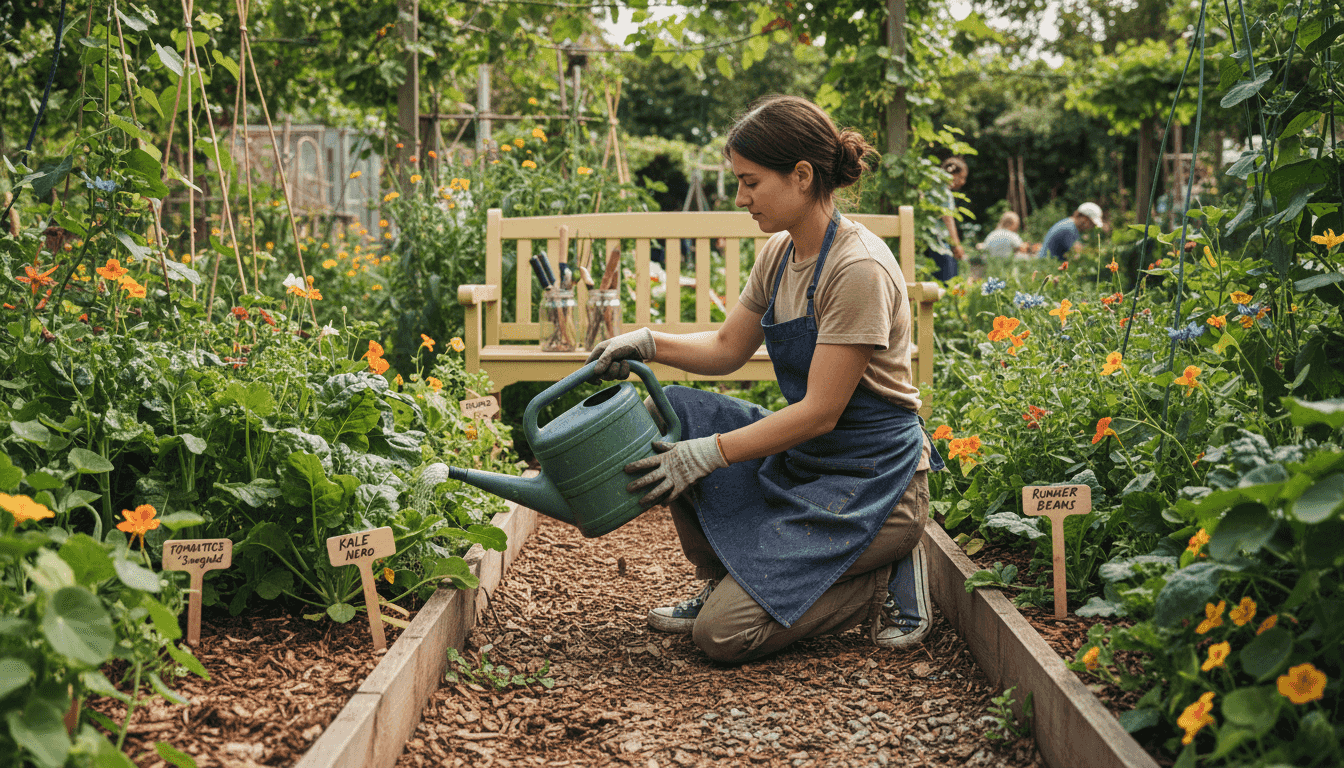
Here is a summary of the most common urban garden types in London and their unique advantages:
| Urban Garden Type | Typical Location | Unique Benefit |
|---|---|---|
| Rooftop Garden | Building rooftops | Maximises unused roof area |
| Container Garden | Terraces and patios | Flexible, portable design |
| Vertical Garden | Building walls/facades | Increases greenery density |
| Balcony Garden | Flat or house balconies | Brings nature near dwellers |
| Community Garden | Shared urban plots | Builds community networks |
Pro tip: Select urban garden types that match your specific space constraints, sunlight exposure, and personal sustainability goals.
Key Features and Sustainable Practices
Sustainable urban gardening practices represent a sophisticated approach to transforming city environments into thriving, multifunctional ecosystems. These practices go beyond simple aesthetic improvements, creating complex green infrastructure that addresses multiple urban challenges simultaneously.
Key sustainable design elements include:
- Multifunctional Plant Configurations: Combining diverse plant types for maximum environmental impact
- Pollutant Reduction Strategies: Selecting plants that actively filter urban air pollution
- Biodiversity Enhancement: Creating habitats that support local wildlife and ecological diversity
- Water Management Techniques: Implementing flood mitigation through intelligent plant placement
- Mental Wellbeing Considerations: Designing green spaces that promote psychological health
Indigenous Species Selection plays a crucial role in sustainable urban gardening. Science-based urban greening approaches prioritise native plants that are naturally adapted to local climate conditions, requiring less maintenance and providing more significant ecological benefits.
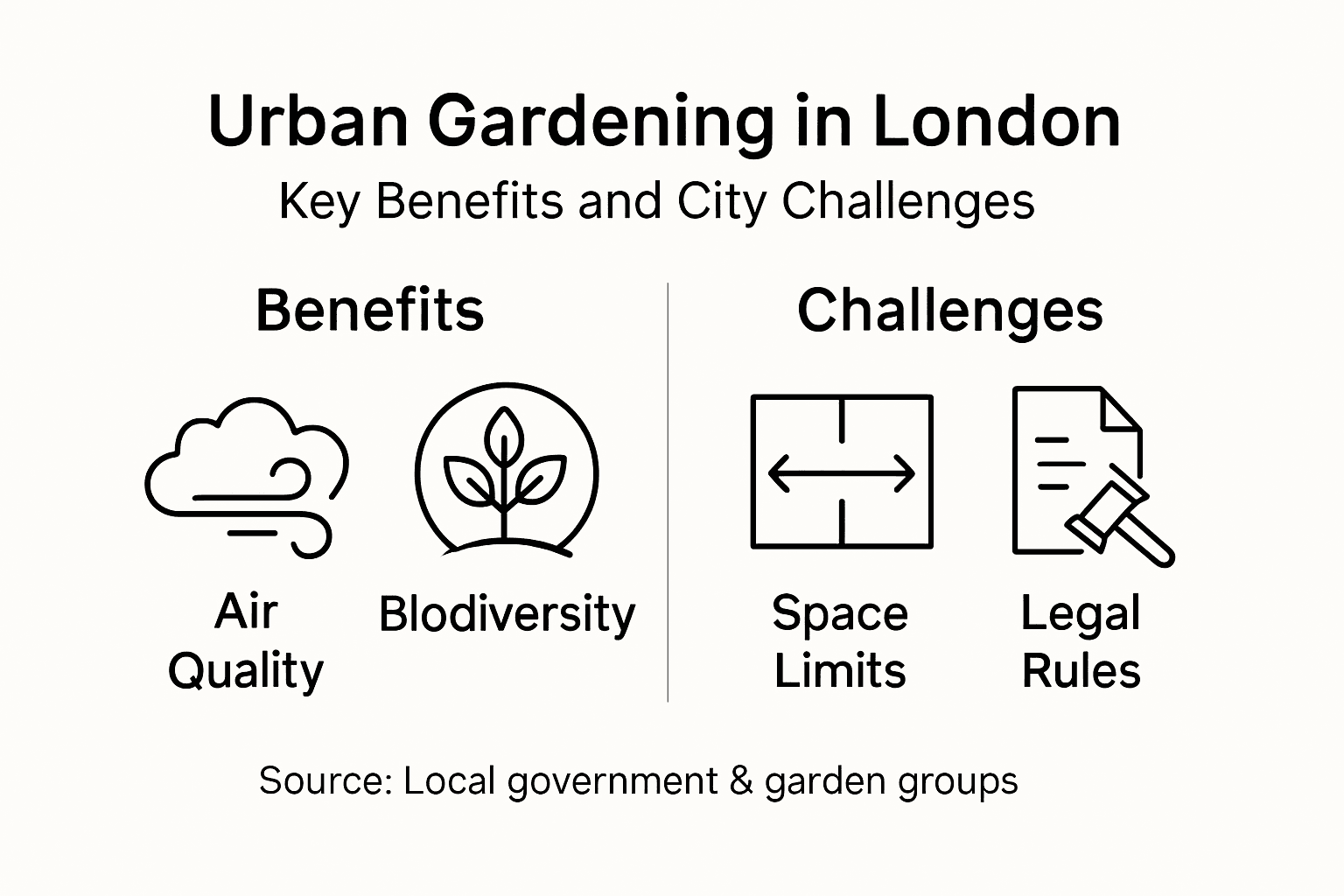
These sustainable practices address seven critical urban challenges: air pollution reduction, biodiversity support, flood risk management, community health improvement, urban heat mitigation, noise reduction, and carbon storage. By integrating sophisticated design principles, urban gardens become powerful tools for environmental resilience and urban transformation.
The following table compares various sustainable practices and the urban challenges they address:
| Sustainable Practice | Urban Challenge Tackled | Extra Benefit |
|---|---|---|
| Rainwater harvesting | Flood risk management | Reduces mains water usage |
| Native plant selection | Biodiversity enhancement | Lower maintenance requirements |
| Pollutant-absorbing plants | Urban air quality improvement | Cleaner, healthier environment |
| Multi-layered plant design | Urban heat island mitigation | Supports diverse pollinators |
Pro tip: Prioritise native plant species and create multi-layered garden designs that maximise ecological functionality and aesthetic appeal.
Legal Framework and Safety in Urban Gardening
Environmental law and urban gardening regulations in the United Kingdom create a comprehensive framework that governs sustainable green infrastructure projects in urban environments. These regulations ensure that urban gardening initiatives balance ecological sustainability with public safety and environmental protection.
Key legal considerations for urban gardeners include:
- Planning Permission Requirements: Understanding local authority guidelines
- Biodiversity Net Gain Compliance: Ensuring projects enhance natural habitats
- Health and Safety Standards: Implementing risk management protocols
- Land Use Restrictions: Navigating zoning and property regulations
- Environmental Impact Assessments: Evaluating potential ecological consequences
Community Garden Regulations represent a complex legal landscape. Urban agriculture legal frameworks require careful navigation of local authority permissions and comprehensive health and safety guidelines. These regulations aim to protect both gardeners and the broader urban ecosystem while promoting sustainable agricultural practices.
Successful urban gardening depends on understanding and proactively addressing these legal requirements. Gardeners must remain informed about evolving environmental policies, engage with local authorities, and design projects that meet stringent sustainability and safety standards.
Pro tip: Consult local planning authorities and obtain necessary permissions before commencing any urban gardening project to ensure full legal compliance.
Costs, Pitfalls and Practical Considerations
Urban gardening implementation requires careful financial and strategic planning to ensure successful and sustainable green spaces. The initial investment encompasses multiple elements that gardeners must thoughtfully consider to maximise long-term ecological and aesthetic value.
Primary cost considerations include:
- Initial Plant Materials: Selection of high-quality, resilient species
- Soil Preparation: Comprehensive ground conditioning and amendment
- Infrastructure Development: Structural elements like raised beds, irrigation systems
- Ongoing Maintenance: Regular care, pruning, fertilisation
- Professional Design Services: Expert consultation for optimal layout
Common Urban Gardening Pitfalls demand strategic mitigation. Science-based urban gardening strategies highlight critical challenges such as inappropriate plant selection, poor spatial design, and potential pollution exacerbation. Successful urban gardeners must carefully evaluate microclimate conditions, understand plant species characteristics, and design adaptive systems that can evolve with environmental changes.
Effective urban gardening transcends mere aesthetic considerations, requiring a holistic approach that balances ecological performance, community engagement, and financial sustainability. Gardeners must remain flexible, continuously learning and adjusting their strategies to maximise the environmental and social benefits of their green spaces.
Pro tip: Create a comprehensive budget that includes initial setup costs, ongoing maintenance expenses, and potential professional consultation to avoid unexpected financial challenges.
Transform Your Urban Space with Wicked Gardens LTD
Urban gardening in London presents unique challenges such as limited space, sustainability goals, and the need for bespoke solutions that respect ecological balance. If you are striving to create a vibrant rooftop garden, vertical oasis, or sustainable community garden that maximises biodiversity and air quality, Wicked Gardens LTD specialises in bringing these visions to life. Our focus on eco-friendly materials, native planting, and sustainable design addresses the very issues highlighted in the article — from pollutant reduction to flood risk management — ensuring your garden thrives within the demands of city living.
Ready to turn your urban garden dreams into reality with a personalised, high-end finish in London? Explore our range of services on Gardening Archives – Wicked Gardens and learn how our expert team, led by founder Slawek, can create bespoke sustainable gardens tailored to your space and lifestyle. Visit our main website Wicked Gardens LTD today and take the first step towards an eco-conscious garden that transforms your city living experience.
Frequently Asked Questions
What is urban gardening?
Urban gardening is the practice of cultivating plants, vegetables, and green spaces in metropolitan environments, transforming limited urban landscapes into productive ecosystems that address contemporary challenges like food security and sustainability.
What are the benefits of community gardens in urban areas?
Community gardens foster local engagement, support food production, enhance air quality, promote biodiversity, and create meaningful green spaces, contributing to the overall well-being of urban communities.
How can I start an urban garden in a small space?
Begin by assessing your available space and light conditions. Consider using vertical gardening techniques, container gardens, or balcony gardens that fit your spatial constraints and personal sustainability goals.
What sustainable practices should I consider for urban gardening?
Key sustainable practices include selecting native plant species, implementing water management techniques, integrating multifunctional plant configurations, and designing gardens that enhance biodiversity and mental well-being.