
Persistent soggy patches and unpredictable rainfall often frustrate even the most discerning South East London homeowners. Effective garden drainage is essential for protecting bespoke outdoor living spaces, ensuring lush plants and safeguarding property value. By understanding key concepts like French drains and challenging common myths such as the use of crocks in pots, you can make informed choices for a sustainable, elegant garden that thrives through every season.
Table of Contents
- Garden Drainage: Definition And Common Myths
- Types Of Garden Drainage Systems Explained
- How Garden Drainage Works In Practice
- Eco-Friendly And Sustainable Drainage Solutions
- Legal Obligations For Drainage In London Homes
- Common Mistakes And Pitfalls To Avoid
Key Takeaways
| Point | Details |
|---|---|
| Understanding Drainage | Garden drainage is crucial for preventing waterlogging and enhancing plant health, requiring targeted solutions tailored to specific garden conditions. |
| Dispelling Myths | Common misconceptions, such as the effectiveness of crocks for pot drainage, can hinder proper water management strategies. |
| Types of Systems | Select the appropriate drainage system—such as surface ditches, French drains, or piped systems—based on the specific challenges of your garden. |
| Compliance Importance | Adhere to drainage regulations to avoid legal ramifications and protect both your property and the environment from potential damage. |
Garden drainage: definition and common myths
Garden drainage represents a critical yet often misunderstood aspect of landscape management for London homeowners. At its core, garden drainage involves strategically managing water movement through soil to prevent waterlogging and protect plant health. Understanding this fundamental concept helps prevent potential damage to garden structures and ensures optimal growing conditions.
Contrary to popular belief, garden drainage isn’t simply about removing excess water – it’s a nuanced process of water management. The Royal Horticultural Society highlights that effective drainage techniques involve sophisticated systems like French drains, ditches, and piped drainage solutions tailored to specific soil conditions.
Several persistent myths surround garden drainage that can lead homeowners astray:
- Myth: Adding crocks improves pot drainage
- Reality: Contrary to traditional thinking, crocks actually disrupt water flow and can create water retention zones
- Myth: Digging automatically improves soil drainage
- Reality: Excessive digging can damage soil structure and potentially reduce nitrogen levels
- Myth: All gardens require the same drainage approach
- Reality: Drainage solutions must be customised based on specific soil type, terrain, and local water table conditions
Understanding these misconceptions helps gardeners develop more effective water management strategies. Proper drainage isn’t just about removing water – it’s about creating a balanced ecosystem that supports healthy plant growth.
Pro tip: Conduct a simple drainage test by digging a 30cm hole, filling it with water, and observing how quickly it drains to understand your specific garden’s water retention characteristics.
Types of garden drainage systems explained
Garden drainage systems are essential solutions for managing water movement in London landscapes, addressing the unique challenges posed by varied soil compositions and urban terrain. Garden drainage systems range from simple surface-level interventions to complex underground networks designed to prevent waterlogging and protect landscape investments.
The most common types of drainage systems include land drainage techniques that strategically manage excess water. These systems typically fall into three primary categories:
-
Simple Surface Ditches
- Effective for sloped terrain
- Low-cost solution for initial water redirection
- Best suited for gardens with mild drainage challenges
-
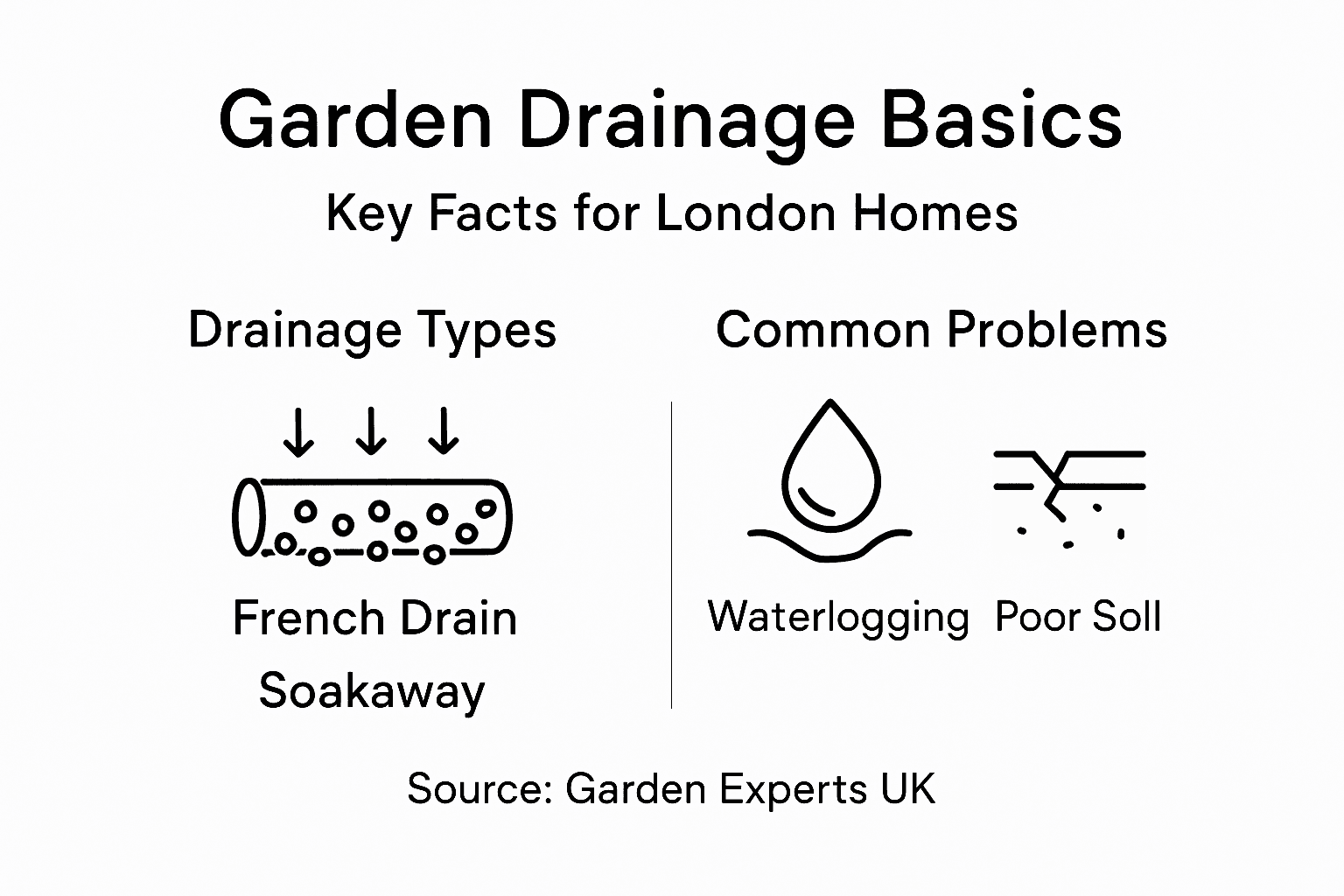
French Drains
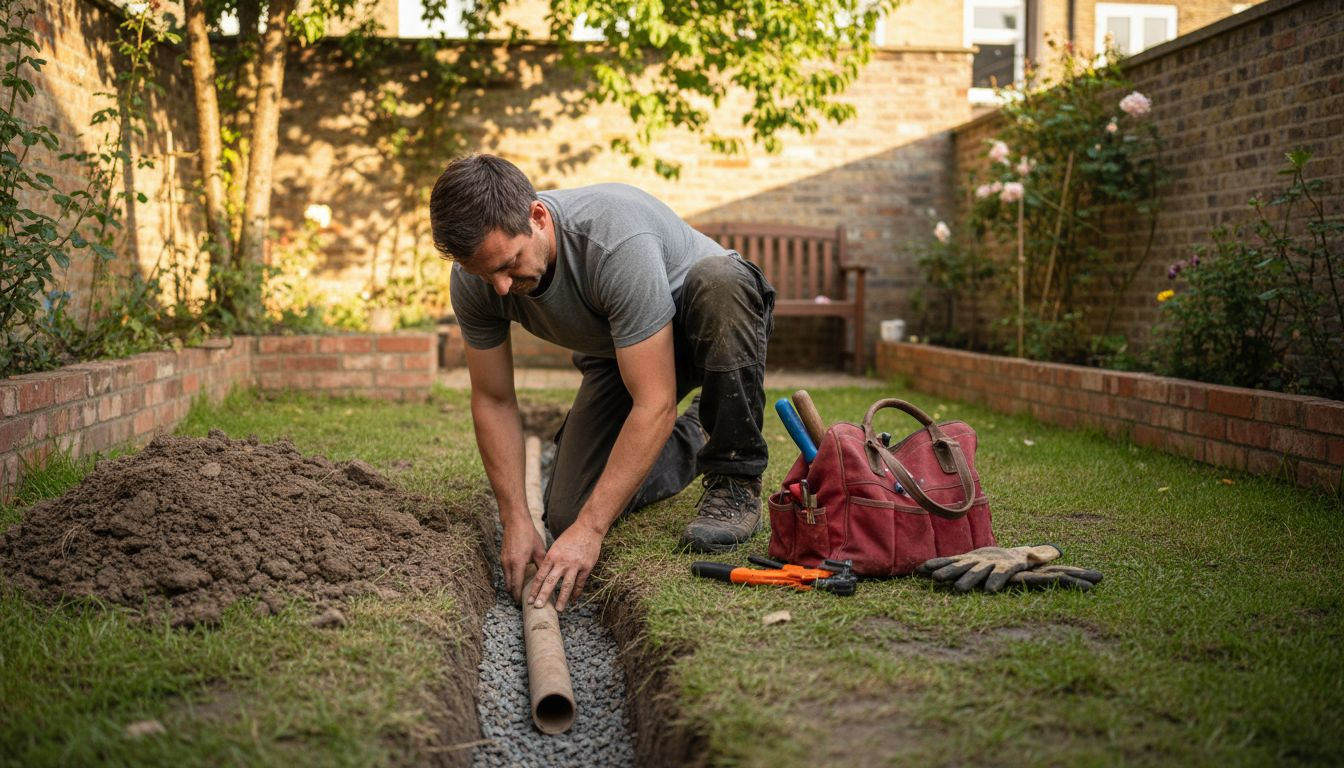
- Utilise perforated pipes surrounded by gravel
- Wrapped in geotextile fabric to prevent silt infiltration
- Ideal for targeted water management in problematic garden areas
-
Piped Drainage Systems
- Most sophisticated drainage solution
- Involves interconnected perforated pipes
- Recommended for severe waterlogging issues
- Requires professional installation
Each drainage system offers unique advantages, and the selection depends on specific garden characteristics, soil type, and water table conditions. Professional assessment helps determine the most appropriate drainage approach for London properties, considering factors like terrain slope, soil permeability, and local precipitation patterns.
Here’s a quick guide to selecting the right garden drainage system for your needs:
| Garden Condition | Recommended System | Relative Cost | Maintenance Level |
|---|---|---|---|
| Mild water pooling | Surface ditches | Low | Occasional clearing |
| Persistent soggy patches | French drains | Moderate | Inspect fabric and gravel |
| Severe waterlogging | Piped drainage system | High | Regular checks, jetting |
| Poor soil infiltration | Permeable paving/SuDS | Moderate to high | Clean surfaces annually |
Pro tip: Before installing any drainage system, conduct a thorough soil assessment and water flow analysis to ensure you select the most effective solution for your specific garden environment.
How garden drainage works in practice
Garden drainage is a sophisticated process that goes beyond simple water removal, involving intricate systems designed to protect London gardens from water-related damage. Drainage mechanisms work by strategically capturing and redirecting excess moisture, ensuring plant health and preventing structural issues in residential landscapes.
The practical implementation of land drainage systems involves several critical steps:
-
Water Collection
- Identifying water accumulation points
- Mapping garden’s natural water flow patterns
- Determining potential drainage obstruction zones
-
System Installation
- Excavating precise drainage trenches
- Laying perforated plastic pipes
- Creating gravel-based water transportation channels
- Wrapping infrastructure in geo-textile fabric
-
Water Redirection
- Channelling water away from vulnerable garden areas
- Preventing soil erosion
- Maintaining optimal moisture levels
- Protecting plant root systems
Professional drainage solutions consider multiple factors during implementation, including soil composition, terrain gradient, and local precipitation patterns. Each garden presents unique challenges, requiring tailored approaches that balance water management with landscape preservation.
Effective garden drainage is not about eliminating water, but about creating a balanced ecosystem that supports healthy plant growth and protects property infrastructure.
Pro tip: Consider conducting a simple drainage test by digging a 30cm hole and observing water absorption rates to understand your specific garden’s drainage characteristics.
Eco-friendly and sustainable drainage solutions
Sustainable drainage solutions represent a critical evolution in garden management, transforming traditional water management approaches into environmentally conscious systems. Sustainable Drainage Systems (SuDS) offer London homeowners innovative methods to manage water runoff while simultaneously supporting local ecosystems and reducing environmental impact.
The UK government has pioneered sustainable drainage approaches that provide multiple ecological benefits:
-
Green Roof Systems
- Absorb rainwater naturally
- Provide additional insulation
- Create urban wildlife habitats
- Reduce surface water runoff
-
Permeable Paving Solutions
- Allow water to seep through surface
- Prevent water accumulation
- Reduce flood risk
- Filter pollutants from water
-
Natural Water Management Techniques
- Swales and bioretention areas
- Infiltration trenches
- Rain gardens
- Detention basins
These innovative drainage approaches go beyond simple water management, creating multifunctional landscapes that support biodiversity, reduce urban heat islands, and contribute to climate resilience. By mimicking natural water cycles, SuDS transform gardens from passive spaces into active environmental contributors.
Sustainable drainage is not just about managing water – it’s about creating living, breathing ecological systems that enhance both environmental and aesthetic value.
Pro tip: Consult a local landscape professional to design a drainage solution that combines ecological functionality with your garden’s unique aesthetic requirements.
Legal obligations for drainage in London homes
London homeowners face complex legal requirements surrounding garden and property drainage, with stringent regulations designed to protect environmental integrity and prevent water-related infrastructure damage. Drainage compliance represents a critical responsibility for property owners, encompassing multiple regulatory frameworks that dictate water management practices.
The UK government has established comprehensive drainage regulations that mandate specific standards for domestic properties:
-
Foul Water Management
- Separate drainage systems for waste water
- Prevent contamination of surface water networks
- Ensure proper connection to municipal sewage systems
- Maintain clear separation between waste streams
-
Surface Water Regulations
- Implement sustainable drainage solutions
- Prevent water pollution
- Manage runoff effectively
- Comply with environmental protection standards
-
Technical Compliance Requirements
- Meet Building Regulations Approved Document H
- Use approved drainage materials
- Install systems preventing environmental contamination
- Regular maintenance and inspection
Property owners must navigate these legal obligations carefully, understanding that non-compliance can result in significant financial penalties and potential enforcement actions. The regulations aim to protect local ecosystems, prevent flooding, and maintain the integrity of London’s complex urban water infrastructure.
Below is a summary of common legal and environmental risks if drainage is neglected:
| Risk Type | Impact on Homeowners | Environmental Consequence |
|---|---|---|
| Legal | Potential fines and enforcement | Increased flood risk |
| Structural | Property or garden damage | Soil erosion, habitat disruption |
| Compliance | Failed property surveys | Waterway pollution |
| Maintenance | Rising repair costs over time | Reduced urban ecosystem quality |
Legal drainage compliance is not merely a bureaucratic requirement, but a fundamental responsibility to protect both private property and public environmental resources.
Pro tip: Consult a certified drainage specialist to conduct a comprehensive audit of your property’s drainage systems, ensuring full compliance with current legal standards.
Common mistakes and pitfalls to avoid
Garden drainage requires meticulous planning and execution, with numerous potential pitfalls that can compromise the entire system’s effectiveness. Drainage mistakes can transform what should be a protective infrastructure into a costly and problematic landscape feature for London homeowners.
The Royal Horticultural Society highlights critical drainage installation errors that homeowners must carefully avoid:
-
Drainage Planning Mistakes
- Installing drainage without determining water discharge routes
- Failing to check local bylaw restrictions
- Neglecting comprehensive site assessment
- Overlooking potential underground utility conflicts
-
Timing and Soil Condition Errors
- Attempting drainage work during wet soil conditions
- Ignoring soil composition and permeability
- Conducting installations without proper ground preparation
- Underestimating seasonal water table fluctuations
-
Maintenance and Long-Term Neglect
- Skipping regular drainage system inspections
- Allowing pipe blockages to develop
- Disregarding early signs of drainage system deterioration
- Failing to clear outfalls and drainage channels
Each of these mistakes can transform a well-intentioned drainage project into an expensive repair nightmare. Professional assessment and strategic planning are crucial to avoiding these common yet potentially disastrous errors.
Garden drainage is a precision practice where small oversights can lead to significant structural and environmental consequences.
Pro tip: Invest in a professional drainage survey before any installation to identify potential issues and design the most effective, site-specific solution.
Elevate Your Garden’s Health with Expert Drainage Solutions
Proper garden drainage is essential to protect your London home from water damage while creating a thriving, eco-friendly outdoor space. This article highlights common drainage challenges like waterlogging, the need for tailored systems such as French drains, and the importance of legal compliance. If your garden struggles with soggy patches or frequent pooling, understanding and addressing these issues now can prevent costly repairs and ensure your plants flourish.
Discover how Wicked Gardens LTD combines bespoke, high-end garden design with sustainable drainage solutions to transform your outdoor space. Our expertise ensures every drainage system we install is customised to your garden’s unique soil and terrain, blending beauty with functionality. Step into a greener, healthier garden by exploring our Gardening Archives – Wicked Gardens or learn about our full range of services on our main page. Don’t wait until drainage problems escalate Take the first step towards your dream garden today with Wicked Gardens.
Frequently Asked Questions
What is garden drainage?
Garden drainage is the management of water movement through soil to prevent waterlogging and protect plant health in gardens.
Why is garden drainage important for homes?
Proper garden drainage is crucial as it protects plants, prevents structural damage to gardens, and ensures optimal conditions for growth by managing excess moisture effectively.
What types of garden drainage systems are available?
Common types of garden drainage systems include surface ditches, French drains, and piped drainage systems, each suited for different drainage needs and soil conditions.
How can I assess my garden’s drainage needs?
You can assess your garden’s drainage by conducting a simple drainage test: dig a 30cm hole, fill it with water, and observe how quickly it drains to understand water retention characteristics.