
Each premium garden in South East London reflects its owner’s vision, but achieving true privacy and elegance relies on more than landscaping alone. Discerning homeowners understand that garden fencing is a vital architectural feature, combining protection, security, and defined boundaries with standout design. With growing demand for bespoke, eco-friendly solutions, this guide reveals how garden fencing enhances privacy and visual harmony while meeting legal and environmental standards tailored to your property.
Table of Contents
- Defining Garden Fencing And Its Purpose
- Popular Types Of Garden Fencing Materials
- Eco-Friendly And Bespoke Options Explained
- Uk Garden Fencing Laws And Boundaries
- Key Considerations For London Homes
Key Takeaways
| Point | Details |
|---|---|
| Purpose of Garden Fencing | Garden fencing serves as a boundary marker, enhancing privacy, security, and aesthetic appeal. |
| Material Selection | Choose materials based on durability, maintenance, and visual style to suit garden needs. |
| Legal Considerations | Familiarise yourself with local regulations on height, ownership, and necessary permissions. |
| Urban Challenges in London | Consider space optimisation and sustainability when selecting fencing in densely populated areas. |
Defining Garden Fencing and Its Purpose
Garden fencing represents a strategic approach to defining and protecting outdoor spaces, serving far more than a simple boundary marker. These structured perimeters are critical architectural elements that transform garden environments, offering multiple functional and aesthetic benefits for discerning homeowners.
At its core, garden fencing provides several fundamental purposes:
- Boundary Definition: Clearly marking property lines and spatial territories
- Privacy Protection: Creating secluded, intimate garden spaces away from external view
- Security Enhancement: Deterring unauthorised entry and protecting valuable garden assets
- Aesthetic Styling: Contributing to overall landscape design and visual coherence
Understanding the legal and practical considerations of garden fencing is paramount. Fencing ownership principles highlight that fence posts located on one’s property typically indicate ownership and maintenance responsibilities. This means selecting and installing garden fencing requires careful consideration of both functional requirements and regulatory guidelines.
Professional landscapers recognise that garden fencing is not merely a utilitarian structure but a nuanced design element. The Sports and Play Construction Association’s guidelines emphasise the importance of durability, design suitability, and safety in achieving an effective fencing solution. These principles extend beyond sports facilities and apply directly to residential garden contexts.
Pro tip: When planning garden fencing, always consult local planning regulations and consider your specific landscape’s unique characteristics before making a final installation decision.
Popular Types of Garden Fencing Materials
Garden fencing materials have evolved significantly, offering homeowners a diverse range of options to suit different aesthetic preferences, budgetary constraints, and functional requirements. From traditional timber to modern synthetic alternatives, the choice of fencing material can dramatically impact a garden’s overall look and performance.
Traditional wooden fencing remains a quintessential choice for British gardens. Close board fencing represents a popular timber option, characterised by vertical feather edge boards fixed to horizontal rails. Key timber fencing varieties include:
- Feather Edge: Overlapping vertical boards providing excellent privacy
- Post and Rail: Classic countryside aesthetic with horizontal wooden rails
- Picket Fencing: Decorative option ideal for cottage-style gardens
- Slatted Panels: Contemporary design allowing partial light penetration
Beyond timber, modern garden fencing materials offer innovative solutions. Composite materials combine wood fibres with recycled plastics, delivering durability and minimal maintenance. Metal options like powder-coated steel and aluminium provide sleek, long-lasting perimeters that resist weathering and corrosion.
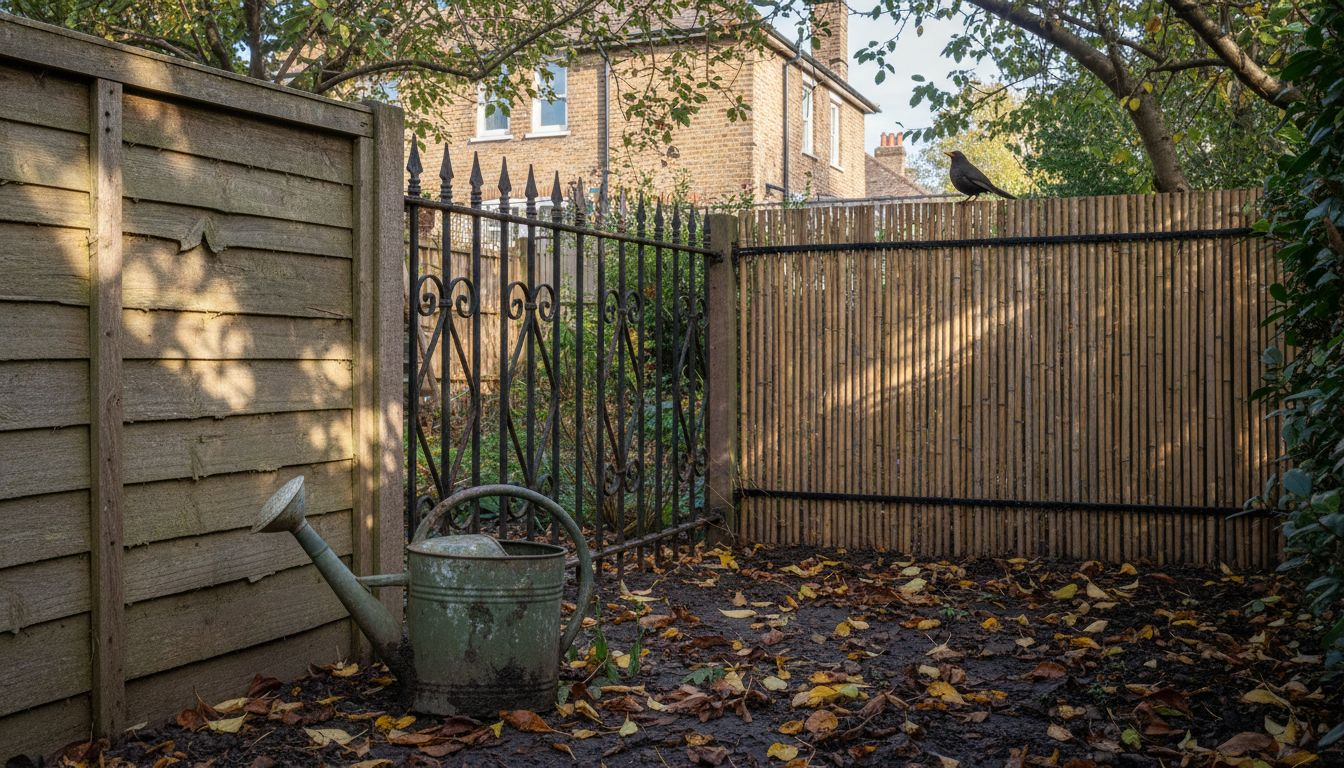
Contemporary garden design increasingly considers both aesthetic and functional requirements. Fencing material selection involves evaluating factors like visibility, safety, durability, and maintenance needs. Professional landscapers recommend choosing materials that complement the existing garden architecture while meeting practical performance standards.
Here is a comparison of common garden fencing materials and their key qualities:
| Material | Durability | Maintenance Level | Visual Style |
|---|---|---|---|
| Timber | Moderate to high | Periodic staining | Traditional, warm, natural |
| Composite | Excellent | Minimal | Modern, versatile |
| Metal (Steel/Alu.) | Outstanding | Occasional cleaning | Contemporary, sleek |
| Bamboo | Good | Occasional sealing | Eco-friendly, exotic |
Pro tip: Always consider local climate conditions and potential maintenance requirements when selecting garden fencing materials to ensure long-term satisfaction and performance.
Eco-Friendly and Bespoke Options Explained
As environmental consciousness grows, garden fencing has transformed from a purely functional boundary marker to a sophisticated design element that balances aesthetic appeal with sustainable principles. Discerning homeowners now seek fencing solutions that not only define spaces but also contribute positively to the ecological landscape.
Historic garden boundary techniques offer inspiring eco-friendly approaches. The ha-ha, a remarkable landscaping innovation, represents a brilliant example of sustainable boundary design. This ingenious sunken fence creates invisible barriers that:
- Preserve uninterrupted landscape views
- Prevent animal encroachment naturally
- Maintain visual continuity with surrounding terrain
- Eliminate the need for traditional obtrusive fencing
Modern eco-friendly fencing materials have expanded dramatically, incorporating recycled and sustainable resources. Composite materials combining reclaimed wood fibres and recycled plastics offer durability while reducing environmental impact. Bamboo, rapidly renewable and naturally robust, provides an excellent alternative to traditional timber, delivering both aesthetic elegance and ecological responsibility.
Contemporary garden design increasingly prioritises sustainable material selection. Sustainable landscaping principles emphasise choosing materials that minimise ecological disruption, support biodiversity, and integrate harmoniously with natural surroundings. Professional landscapers now approach garden fencing as a holistic design challenge, balancing aesthetic preferences with environmental stewardship.
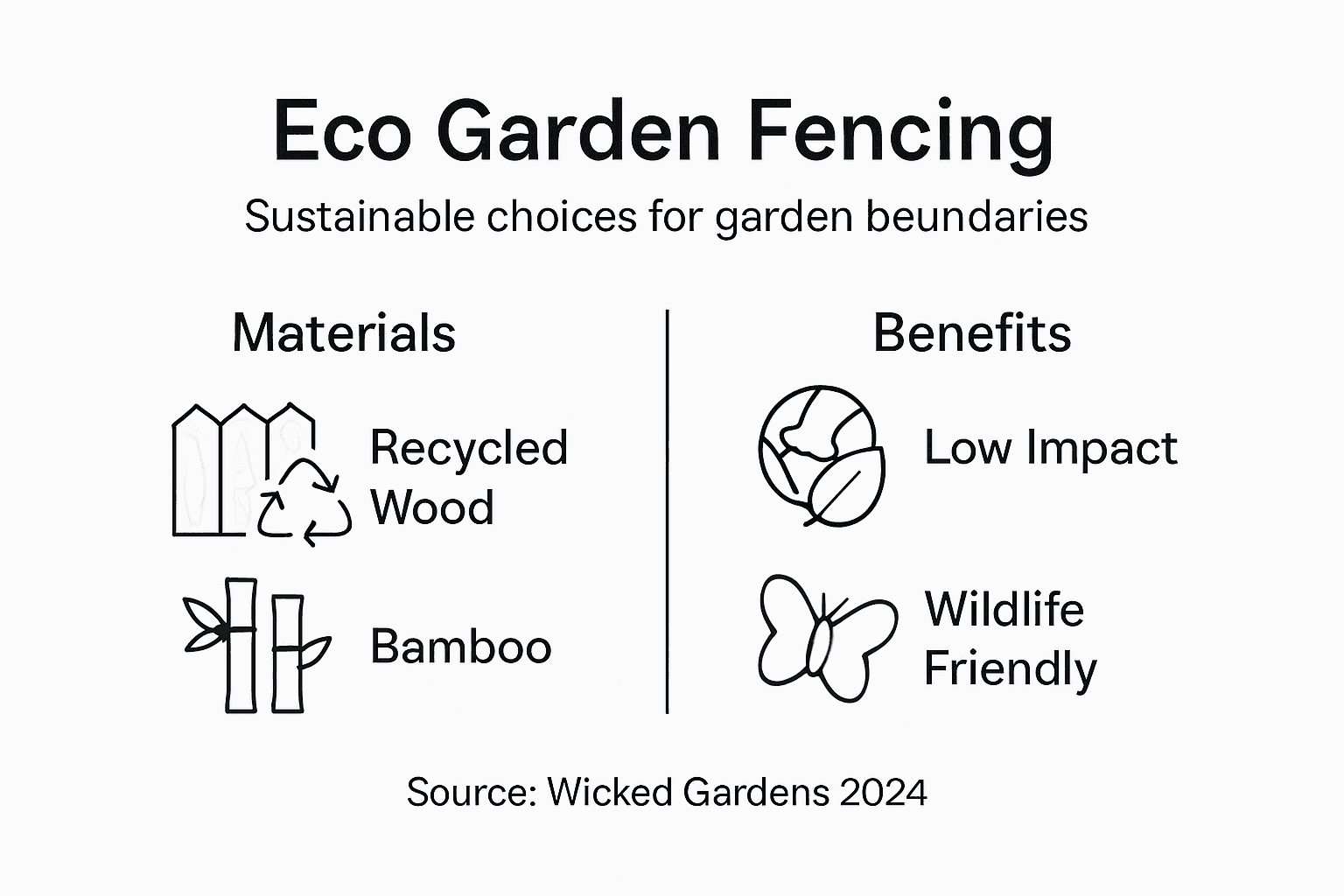
Pro tip: Select garden fencing materials that not only complement your landscape’s aesthetic but also support local biodiversity and minimise environmental impact.
UK Garden Fencing Laws and Boundaries
Navigating the legal landscape of garden fencing requires careful understanding of UK property regulations and local planning guidelines. Homeowners must balance aesthetic preferences with legal requirements to ensure compliance and maintain positive neighbourly relations.
Garden fencing regulations in the United Kingdom are nuanced and specific. Key legal considerations include:
- Height Restrictions: Fences up to 2 metres generally do not require planning permission
- Boundary Ownership: Fence posts on your land indicate maintenance responsibility
- Consent Requirements: Structures above 2 metres need explicit planning approval
- Neighbour Consultation: Recommended before making significant boundary changes
The legal complexity extends beyond simple height measurements. Fire safety regulations play a crucial role, particularly for garden structures near property boundaries. Specific building codes mandate the use of fire-resistant materials when constructing fences or garden buildings in close proximity to existing structures, reflecting the stringent safety standards in UK construction guidelines.
Understanding property boundary laws requires careful interpretation. Some key principles include determining fence ownership through post placement, respecting neighbour rights, and ensuring that any boundary modifications comply with local planning regulations. Professional landscapers recommend thorough research and potentially consulting local authorities before making significant fencing modifications.
The table below outlines principal legal and planning concerns for UK garden fencing:
| Issue | Typical Regulation | Practical Implication |
|---|---|---|
| Maximum Height | 2 metres without planning permission | Taller fences need approval |
| Responsibility | Ownership based on post location | Must maintain your side |
| Neighbour Consultation | Strongly recommended | Helps avoid disputes |
| Fire Safety | Fire-resistant materials by boundaries | Required near outbuildings |
Pro tip: Always verify exact property boundary details and obtain necessary permissions before installing or modifying garden fencing to avoid potential legal disputes.
Key Considerations for London Homes
London’s unique urban landscape presents distinctive challenges and opportunities when selecting garden fencing, demanding a nuanced approach that balances aesthetic appeal, functional requirements, and spatial constraints. Homeowners must navigate complex considerations specific to metropolitan living environments.
Garden border planning requires careful consideration of London’s compact residential spaces. Critical factors include:
- Space Optimization: Selecting fencing that maximises limited garden areas
- Privacy Management: Creating secluded spaces within densely populated neighbourhoods
- Architectural Harmony: Ensuring fencing complements surrounding urban design
- Microclimate Considerations: Accounting for wind tunnels and shade patterns typical in city environments
Sustainability emerges as a paramount concern for London homeowners. Urban garden design must address environmental challenges, particularly water management and ecological impact. Permeable fencing materials and designs that support drainage become increasingly important, especially in areas prone to surface water accumulation.
Professional landscapers recognise that London garden fencing goes beyond mere boundary definition. The approach requires a holistic understanding of urban ecological principles, local planning regulations, and the delicate balance between aesthetic preferences and practical functionality. Each fencing decision must consider the intricate ecosystem of London’s residential landscapes.
Pro tip: Consult local planning guidelines and consider your specific microclimate before finalising garden fencing to ensure optimal performance and compliance.
Elevate Your Garden with Bespoke Fencing Solutions from Wicked Gardens
The article highlights the essential role of garden fencing in defining boundaries, enhancing privacy, and adding security while considering eco-friendly and legal aspects. Many homeowners in London face the challenge of choosing fencing materials that not only complement their outdoor spaces but also comply with strict UK regulations and urban planning requirements. Achieving the perfect balance between durability, sustainability, and aesthetic appeal calls for expert guidance and high-quality bespoke landscaping services.
At Wicked Gardens we specialise in crafting tailored garden fencing and landscaping solutions that transform your garden into a private sanctuary. Combining eco-friendly materials with innovative design, we ensure your fencing complements your unique space while respecting planning laws. Discover inspiration and expert advice in our Gardening Archives – Wicked Gardens, where you can explore ideas that align with sustainable and stylish garden boundaries. Whether you seek traditional timber styles or modern composite options, our bespoke services deliver outstanding results designed for lasting enjoyment.

Ready to define your garden with stylish, sustainable fencing that enhances your outdoor living? Visit Wicked Gardens today to schedule your personalised consultation and take the first step towards creating the garden you deserve.
Frequently Asked Questions
What are the primary purposes of garden fencing?
Garden fencing serves multiple key functions, including defining property boundaries, providing privacy, enhancing security, and contributing to the aesthetic appeal of outdoor spaces.
What materials are commonly used for garden fencing?
Popular garden fencing materials include timber, composite materials, metal (such as steel and aluminium), and bamboo, each offering varying levels of durability, maintenance, and visual style.
How can I ensure my garden fencing complies with local regulations?
To comply with local regulations, you should be aware of height restrictions, ownership responsibilities, and any required planning permissions. Consulting local authorities and understanding boundary ownership principles is recommended.
What eco-friendly options are available for garden fencing?
Eco-friendly fencing options include materials like bamboo and composite materials made from recycled wood fibres and plastics. These alternatives provide durability while minimising environmental impact and supporting local biodiversity.
Recommended
- Garden Fencing Ideas London | Private Garden Fence
- The Benefits of Hiring a Professional Landscaping Service – Wicked Gardens
- Sustainable Garden Design Blackheath | Wicked Gardens
- Choosing the Right Water Feature for Your Garden – Wicked Gardens
- 5 Ideas for a More Earth-Friendly Garden (5 photos) | Shutter World
- Role of Gutters in Landscaping Protection Florida